
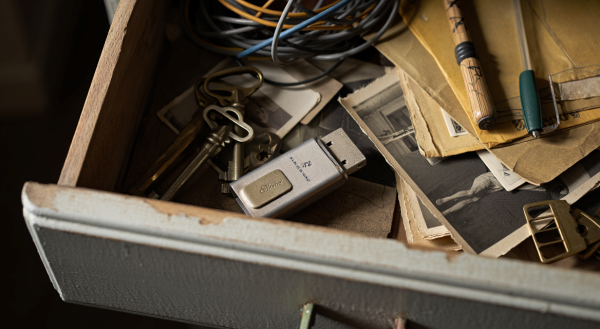
Will files be safe if you plug in a USB flash drive that has been sitting in a drawer for 6 years? Many users wonder about that. On March 10 local time, online outlet Gigazine introduced results that reviewed the long-term data retention of USB flash drives, based on an experiment by IT blogger Zack Vance (잭 반스).
The experiment, launched in 2020, stored data on 10 Kingston 32GB USB flash drives. It left them for a long period without power and observed changes in the data. The key was to see whether bit degradation occurred over time.
A blog post published in 2022 said no bit degradation was found in either "Drive 1," checked 1 year after data was stored, or "Drive 2," tested after 2 years. The post also said the 10 drives were prepared to see what changes would occur when left unpowered for a long time.
Drives that completed a test were written with data again and rechecked a year later. It also mentioned that some drives used in the experiment may have been left in subzero conditions for about a month during a move. It continued tracking whether data was damaged despite the relatively harsh storage conditions.
Results from longer tests were similar. Checks found no bit degradation in "Drive 1" after 1 year, "Drive 2" after 2 years, "Drive 3" after 3 years and "Drive 4" after 4 years. It said that a retest of "Drive 1" to "Drive 4" after 5 years also found no bit degradation, and neither did a check of "Drive 5" after 6 years.
Future tests will be conducted at longer intervals. Vance decided against checking a new drive every year after judging it likely that USB flash memory can retain data for more than 10 years. He plans to test "Drive 6" after 8 years, "Drive 7" after 11 years, "Drive 8" after 15 years, "Drive 9" after 20 years and "Drive 10" after 27 years, in that order.
 Yoonseo Lee
yslee@d-today.co.kr
Yoonseo Lee
yslee@d-today.co.kr