
The government is stepping up its artificial intelligence (AI)-centred national strategy project, K-Moonshot (K-Moonshot). It is also seeking to strengthen AI use capabilities for all citizens, including an AI contest for all generations and building an education system.
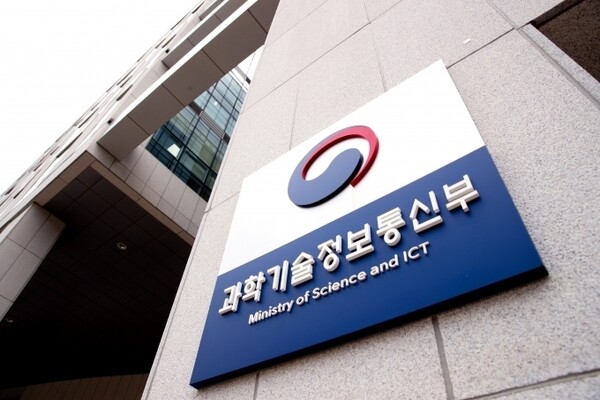
Bae Kyung-hoon (배경훈), deputy prime minister and minister of science and ICT, chaired the fifth meeting of ministers related to science and technology at the Government Complex Seoul on Tuesday. The meeting discussed seven agenda items including measures to strengthen and normalise AI use capabilities for all citizens and a report on K-Moonshot progress.
Bae said, "How we use the golden time given to us will determine the future so that AI works as an opportunity, not a crisis." He said the government would flesh out, check and implement execution plans through the ministerial meeting so that the public can feel the effects of policies.
The meeting discussed seven items: measures to strengthen and normalise AI use capabilities for all citizens; a plan to 추진 a nationwide AI contest for all citizens; a report on K-Moonshot progress; directions to overhaul a pan-ministerial technology management system and strengthen cooperation; AX strategies of four science and technology institutes to foster regional talent and drive AX innovation; an AI transition strategy for agriculture and rural areas; and directions to 추진 cloud-native transition of administrative and public systems.
◆ 12 national missions confirmed across eight strategic technology areas
The government presented a report on K-Moonshot progress at the meeting and confirmed 12 national missions across eight strategic technology areas. K-Moonshot is a policy to secure competitiveness in future core technologies by 추진 large-scale national research and development (R&D) projects based on an AI platform. The government previously unveiled its K-Moonshot 추진 strategy at the National AI Strategy Committee in February.
The government confirmed the national missions through consultations among relevant ministries and will link and use成果 of existing R&D projects related to each mission to carry them out.
It will appoint programme directors (PDs) to oversee 추진 for each mission. PDs will draw up technology roadmaps for each mission and oversee R&D directions, and will also take part in planning new R&D projects for 2027 and in the budgeting process. The government plans to launch a pan-ministerial K-Moonshot task force in May and announce mission-by-mission action plans.
◆ Expanding public AI use... building a lifetime education system
The government reviewed and approved measures to strengthen and normalise AI use capabilities for all citizens. It is reviewing a plan to distribute part of the graphics processing unit (GPU) resources secured by the government, starting in the first half of this year, to companies that provide their own AI model application programming interfaces (APIs) to platforms and services that interact with the public.
It will also build an AI education system that considers the entire life cycle, from students to older people. It plans to build an integrated online education platform called "Our AI Learning" by June and to offer visiting education programmes nationwide through the "AI Digital Learning Center".
A draft plan for a nationwide AI contest for all citizens was also reported. The government will hold a nationwide AI contest throughout the year starting in March, with participation from all generations. With the spread of generative AI technologies, it plans to hold various contests with a target of more than 2 million participants to raise AI use capabilities. The government plans to form a consultative body involving private companies and relevant ministries to expand the contests into public-participation events.
The nationwide AI contest will begin with an opening ceremony on March 26 and run from April to November. The government plans to present awards for outstanding results at a year-end AI festival, with prize money totalling 3 billion won.
◆ Overhauling a pan-ministerial strategic technology management system
The government will overhaul management systems for a total of 513 strategic technologies, centred on four laws including the Act on Promotion of National Strategic Technologies, the Restriction of Special Taxation Act, the Act on National High-Tech Strategic Industries, and the Industrial Technology Protection Act, in response to competition for technological hegemony. It also decided to identify 19 common technology areas, including semiconductors, displays, AI and software (SW), quantum and telecommunications, and to strengthen policy linkages among ministries.
It also approved the "AX strategy for science and technology institutes" to drive AX innovation in regional industries and foster talent, centred on four major science and technology institutes. It plans to build regional industry-academia-research cooperation institutes centred on the institutes and create AI education clusters to foster regional AI innovation ecosystems.
AI-based innovation will also be pushed in agriculture. Through an "AI transition strategy for agriculture and rural areas", the government will promote building AI farms (AI-Farm), automation of agriculture based on autonomous farm machinery and drones, and building smart distribution systems.
It will also shift government administrative systems to a cloud-based structure. The government will set a roadmap to fully convert public information systems to a cloud-based structure by 2030 and plans to apply cloud-native technologies to key information systems.
 Jin-ho Lee
jhlee26@d-today.co.kr
Jin-ho Lee
jhlee26@d-today.co.kr