
[Digital Today reporter Hyunwoo Choo (추현우)] Elon Musk is preparing a $1.5 trillion IPO for SpaceX, drawing expectations in capital markets. It is because there is hope it will break a multi-year IPO drought and revive the offering market. By contrast, a merger between SpaceX and Tesla is expected to be a complex task.
• SpaceX and Tesla... Elon Musk's big picture toward Mars, 'Muskonomics' • Tesla to halt Model S and Model X production... focus on producing Optimus robots • Tesla is no longer an electric vehicle company... Elon Musk's big picture
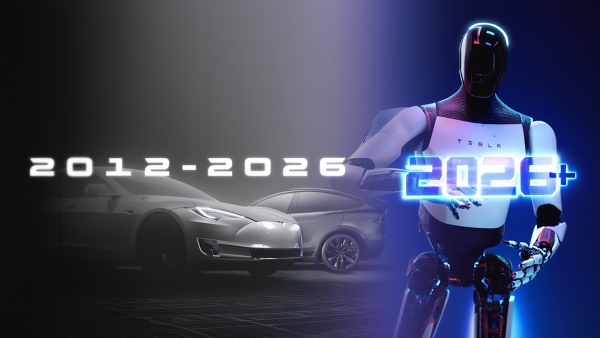
Tesla will end production of its premium Model S and Model X and fully convert the line into a production facility for its humanoid robot Optimus. This is seen as a strong sign Tesla wants to reshape itself beyond an automaker into a physical AI company.
Tesla is strengthening its AI and robot-centred strategy while reducing vehicle output. As a result, electric vehicle revenue is also naturally declining, while it accelerates a shift into an AI-based technology-focused company.
• Tesla signals Apple CarPlay adoption... iPhone-vehicle integration becomes reality • Volvo to maintain Apple CarPlay support... a different choice from GM
Tesla is pushing a plan to break with its closed software policy and partially integrate Apple CarPlay into its infotainment system. Instead of replacing the entire display, it is expected to run as a window within the system and operate independently from core driving functions such as Autopilot.
Volvo also announced it will fully maintain support for Apple CarPlay and Android Auto. This runs directly against moves by some automakers, including GM, that have recently decided to remove CarPlay to build their own systems.
• Tesla to install 4680 battery cells in Model Y again... due to tariffs? • Why Tesla's Model Y has 4680 batteries again... the bigger picture of 'battery independence'
Tesla has reinstalled 4680 battery cells in the Model Y and resumed production. However, some say Tesla used the 4680 battery to avoid tariffs. Unlike initial expectations, the 4680 battery is being used less to cut costs and more as a way to respond to trade barriers.
In addition, news emerged that Tesla has officially confirmed success in the "dry electrode process," the biggest challenge for mass production. The aim is to achieve two goals at once: breaking through tariff barriers and taking the lead in the next-generation solid-state battery era through cost reductions and supply chain independence.
• Waymo explains robotaxi crash involving child... "It was safer than a human driver" • Tesla robotaxi has accident rate 9 times higher than humans... dispute over need for verification
A Waymo robotaxi hit a 10-year-old child in California, but the vehicle slowed immediately, avoiding serious injury. Waymo said it reacted faster than a human driver and underscored the importance of safety systems.
Data has been released showing Tesla's robotaxi has an accident rate 9 times higher than human drivers. The seriousness of the problem stands out because the accident rate was high even though safety staff were aboard every vehicle. By contrast, Waymo is maintaining a better safety record with unmanned vehicles.
• Autonomous driving star Luminar moving toward breakup... lidar and semiconductors to find separate new owners • Fallout from U.S. EV investment gambit... GM and Ford losses, Hyundai Motor shifts flexibly • Ford dismisses talk of U.S. EV production with Xiaomi... "No plan to pursue"
An unidentified bidder offered $33 million at the last minute ahead of the sale of the lidar business of automotive lidar specialist Luminar, but it was not selected due to defect issues. Ultimately, MicroVision acquired the lidar business, and the semiconductor unit was sold to Quantum Computing, putting Luminar on track for breakup.
As the U.S. electric vehicle market cools sharply, Hyundai Motor and U.S. automakers are adjusting their investment strategies. Hyundai Motor is seeking to minimise losses by converting its electric vehicle plant in Georgia to produce internal combustion and hybrid models. GM and Ford have also posted large losses as the EV market grows more slowly than expected.
Ford, meanwhile, denied reports that it is cooperating with Xiaomi to produce electric vehicles in the United States. The possibility of battery cooperation with BYD remains. Global expansion by Chinese electric vehicle makers is accelerating.
• Audi removes large touch screens... analogue buttons return
Audi announced a new interior philosophy that moves away from the industry's large-screen competition and emphasises users' sense of touch and intuition. At the centre is Concept C, which shows the future of an electric sports car with a restrained, human-centred aesthetic rather than a technology-dominated space.
• Taxi and mobility industries begin building an industrial ecosystem for shift to autonomous driving • Socar's Modu's Parking launches airport parking reservation service for Lunar New Year holiday • Autonomous A2Z autonomous driving revenue jumps 50 percent
The taxi and mobility industries agreed to cooperate in building an industrial ecosystem for shifting corporate taxis to autonomous driving. The Korea National Joint Conference of Taxi Associations signed a business agreement for a mutually beneficial consultative body on shifting corporate taxis based on licences to autonomous driving with the Korean Society of Transportation, Hyundai Motor, Kakao Mobility, Autonomous A2Z, Samsung Fire & Marine Insurance and Humax Mobility.
Socar launched a parking reservation service near airports. Modu's Parking, an online parking platform operated by Socar, launched a pre-booking service for parking lots near Gimpo Airport and Incheon International Airport.
Autonomous A2Z achieved its highest-ever revenue and ranked 7th in a global competitiveness assessment at the same time. AI autonomous driving company Autonomous A2Z recorded 16.0 billion won in revenue in 2025. That was up 50 percent from 10.7 billion won the previous year. It posted more than 10.0 billion won in revenue for a second straight year at the pre-commercialisation stage.
 Hyunwoo Choo
cookinpapa@d-today.co.kr
Hyunwoo Choo
cookinpapa@d-today.co.kr