
Olive Young, Daiso and Musinsa, dubbed 'Ol-Da-Mu', are expected to post record results for last year, emerging as new powerhouses in South Korea's retail industry. The trio is continuing its expansion drive this year. They are also accelerating efforts to secure additional growth engines through category changes and stronger offline touchpoints.
Industry officials said on March 3 that Olive Young and Musinsa are seen reaching the 5 trillion won range in annual sales and transaction volume last year, while Daiso is seen reaching the 4 trillion won range in annual sales.
Olive Young is seen topping 5 trillion won in annual sales last year, following 3.87 trillion won in 2023 and 4.79 trillion won in 2024.
Olive Young is expanding beyond beauty into wellness. Wellness is a segment that encompasses health management across lifestyles and is a consumer market centered on prevention, management and self-care. Olive Young aims to expand from the beauty segment it has focused on into wellness to develop a new market focused on physical and mental health.
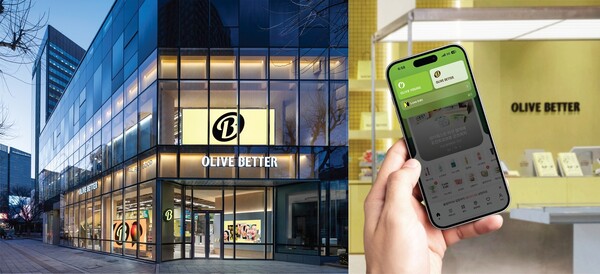
Olive Young opened the first offline Olive Better store last month in Gwanghwamun, Seoul. The large store is a two-floor space spanning 130 pyeong and houses about 500 brands. Online, it offers the service in an app-in-app format within the Olive Young application, using existing infrastructure. The share of online sales rose to the 30 percent range, strengthening the online-offline combined model. Olive Young plans to open a second Olive Better store in Seoul's Gangnam area in the first half of the year.
Musinsa is expected to top a record 5 trillion won in transaction volume last year. Musinsa's gross merchandise value, or GMV, totaled 2.3 trillion won in the first half of last year. It is seen as symbolic that the company built a 5 trillion won-scale transaction volume after starting as a fashion vertical platform.
Musinsa plans to increase the number of offline stores in South Korea to 50 by the end of this year. For global stores, it had 34 locations as of the end of December last year, comprising 33 in South Korea and 1 in China, and is targeting 60 locations by the end of this year. It also said it plans to open about 20 fashion and beauty stores in the Seoul Forest area in the first half of this year to complete a 'K-fashion cluster'.
It is also taking an aggressive approach to growth in beauty by placing its own brands and tenant brands in offline stores. Transaction volume for four Musinsa in-house beauty brands - Musinsa Standard Beauty, Oddtype, Witty and Notherub - grew 120 percent last year from a year earlier. It is focusing on building in-house beauty brand store lineups at sites such as Musinsa Megastore Yongsan and the Musinsa Standard store at Hyundai Department Store's Mokdong branch.
Daiso, which posted 3.97 trillion won in sales in 2024, is estimated to exceed the mid-4 trillion won range in annual sales last year. Daiso plans to focus this year on improving efficiency in store operations and its logistics system to maintain its uniform pricing policy.
Based on its nationwide network of about 1,600 stores, Daiso has secured high accessibility and is expanding its product portfolio into categories such as health functional foods and beauty. Sales in its cosmetics category rose 144 percent in 2024 and grew about 70 percent last year. Last month, they also increased about 30 percent from a year earlier, extending the uptrend.
From May, it is set to release low-priced sanitary pads with Kleannara. This is seen as an extension of Daiso's value-for-money pricing policy that lowers consumers' burden in a high-inflation environment.
An industry official said moves to expand into adjacent categories such as wellness, beauty and household goods are continuing. The official said a trend is expected in which platforms that are not just sales channels, but have capabilities in discovering brands, data-based curation and connecting global distribution networks, take market leadership.
 Shin-hye Ahn
doubletap@d-today.co.kr
Shin-hye Ahn
doubletap@d-today.co.kr