
[DigitalToday intern reporter Seung-ah Yoo] Audi has devised a physical button panel that can be hidden behind a touchscreen and pulled out when needed. The patented technology keeps a touchscreen-focused interior design while allowing drivers to operate frequently used functions with physical buttons.
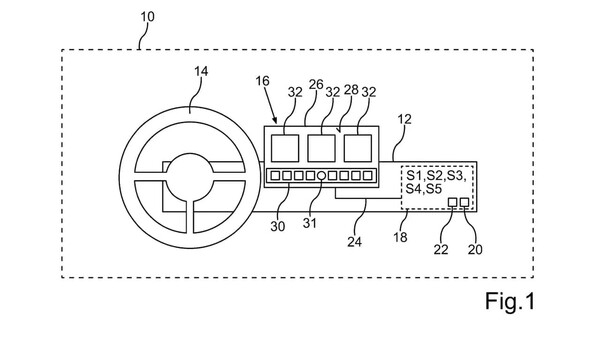
On Nov. 25 (local time), electric vehicle news outlet InsideEVs reported that Audi's patent filing includes a structure that places a thin button panel beneath the touchscreen. The panel can include multiple physical buttons and dial-type controls. The panel retracts behind the screen or slides out when the user presses a button or issues a voice command.
When the physical buttons are hidden, virtual buttons with the same functions and layout appear at the bottom of the touchscreen. When the physical buttons are brought out, the virtual buttons disappear, freeing up space on the screen to show other content. The system is designed to let users move freely between physical and touch controls.
It has not been disclosed which specific functions would be placed on the panel. Patent images show a circular control in the centre that could be a volume dial. Buttons on either side could be assigned to functions such as climate control, heated seats and driving modes, but that has not been confirmed.
The patent aligns with a broader move in the auto industry to step back from touchscreen-centric design and reintroduce physical buttons. Volkswagen is expanding physical buttons for key functions after consumer backlash against touch-heavy interior designs. Mercedes-Benz has also acknowledged the industry focused too heavily on removing physical buttons and has signalled the return of some controls.
Audi also appears to be reviewing interior designs that previously made active use of physical buttons and dials. Physical buttons can improve convenience while driving by allowing drivers to operate controls by feel without taking their eyes off the road.
Still, it is difficult to implement all vehicle functions with physical buttons. As the number of in-vehicle functions grows, dashboards could require hundreds of buttons. Audi's patent is closer to a compromise that provides physical buttons for core frequently used functions, with the rest operated via the touchscreen.
It has not yet been confirmed whether the technology will be applied to mass-produced vehicles. A patent filing alone does not mean commercialisation is assured. Still, Audi's attempt to retain a touchscreen-focused interior design while also securing the convenience of physical buttons is drawing attention.
 Seung-ah Yoo
ysah@d-today.co.kr
Keyword
#Audi #InsideEVs #Volkswagen #Mercedes-Benz #DPMA
