
South Korea's financial authorities will raise the top-up balance limit for prepaid electronic payment instruments used for simple payments to as much as 5 million won from the current 2 million won. The system will also be improved to allow foreign tourists to top up as much as 3 million won after procedures such as e-passport checks and facial authentication. The authorities will introduce a daily usage limit and tighten rules to prevent fraudulent use in line with the higher top-up limit.
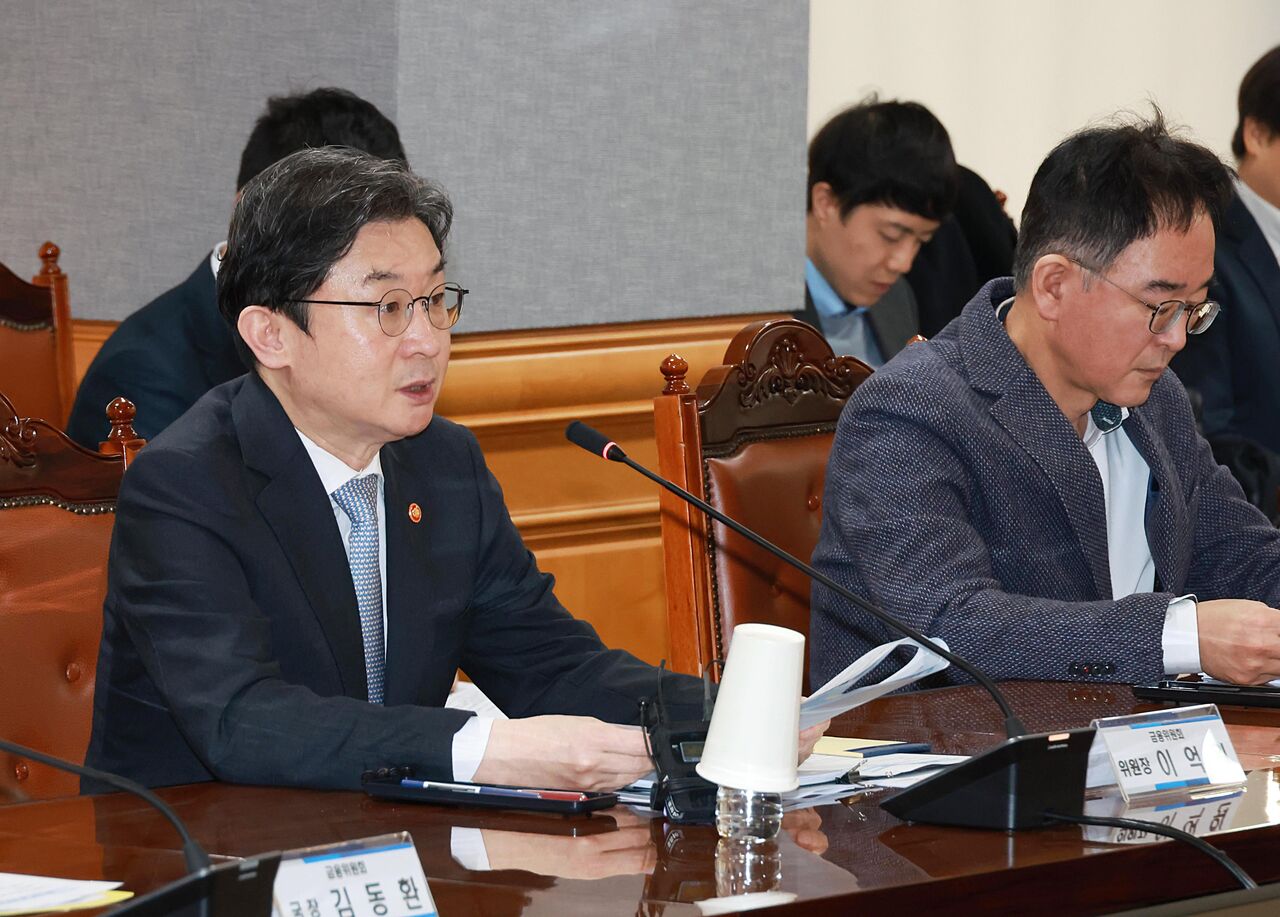
The Financial Services Commission on Nov. 26 held a roundtable on improving the prepaid electronic payment instrument system chaired by Financial Services Commission Chairman Lee Eok-won (이억원) and announced measures to improve the regulatory framework for prepaid electronic payment instruments.
The overhaul follows a judgment that the 2 million won cap for registered prepaid electronic payment instruments, set in 2008, does not sufficiently reflect inflation and the expansion of the digital payment market. The average daily amount spent using prepaid electronic payment instruments rose to 1.3051 trillion won last year from 467.6 billion won in 2020.
Under the measures, the top-up balance limit for registered prepaid electronic payment instruments will rise to 3 million won when identity is verified through a bank account. The limit can be raised to as much as 5 million won if users undergo real-name verification and the prepaid operator meets security requirements.
The authorities will also introduce a daily usage limit that includes payments and simple remittances. They plan to allow up to 6 million won a day for users verified through a bank account and up to 10 million won a day for users verified with real-name checks.
Foreign tourists' top-up cap to 3 million won; anti-fraud safeguards tightened
The prepaid payment system for foreign tourists will also be improved. Previously, the limit stayed at 1 million won even after identity verification, but the top-up balance limit will be expanded to 3 million won after e-passport verification, linkage of passport and entry-departure information, and real-time facial authentication. The daily usage limit will be 6 million won.
The prepaid electronic payment instrument will be usable only at domestic merchants, and transfers between users will be banned. Use will be restricted after 90 days from issuance or after the user leaves the country.
For long-term foreign residents in South Korea, offline open banking will also be allowed. The measure will apply to foreigners who hold an alien registration card or a domestic residence report card, and it will be introduced first centered on stores specialized for foreigners.
Rules to protect users will also be tightened. The authorities plan to recommend that some prepaid operators rationalise minimum top-up amounts and guide them to restrict prepaid payments in gambling-related industries and other sectors. They will also push regulation on the transfer or acquisition of access media for prepaid electronic payment instruments and the operation of 24-hour damage reporting channels.
The commission said it will introduce items that do not require legal revisions by the first half of next year. For tasks that require revisions, it plans to prepare amendments in the first half of next year and pursue revisions within the year. It will also review a plan to implement the higher top-up limit first through designation as an innovative financial service ahead of legal revisions.
Lee said, "Unlike the changed digital payment environment, regulations on prepaid electronic payment instruments are still stuck in 2008." He said, "We have prepared measures to improve the system so we can expand convenience while also strengthening user protection devices."
 Ji-young Lee
ljy@d-today.co.kr
Keyword
#Financial Services Commission #prepaid electronic payment instruments #simple payments #open banking #foreign tourists
