
AI-based online brand protection company Wigofair said on Wednesday it has unveiled an "MCP server" that allows customers to connect Wigofair to AI services they already use.
According to the company, when the Wigofair MCP server is connected, brand protection managers can ask and instruct AI in words instead of accessing a dashboard, searching with filters and organising results in Excel, such as, "Show me suspicious sellers that newly appeared this week" and "Pick out only the sellers that reappeared and report them." It also said compiling materials for management reporting can be handled through dialogue.
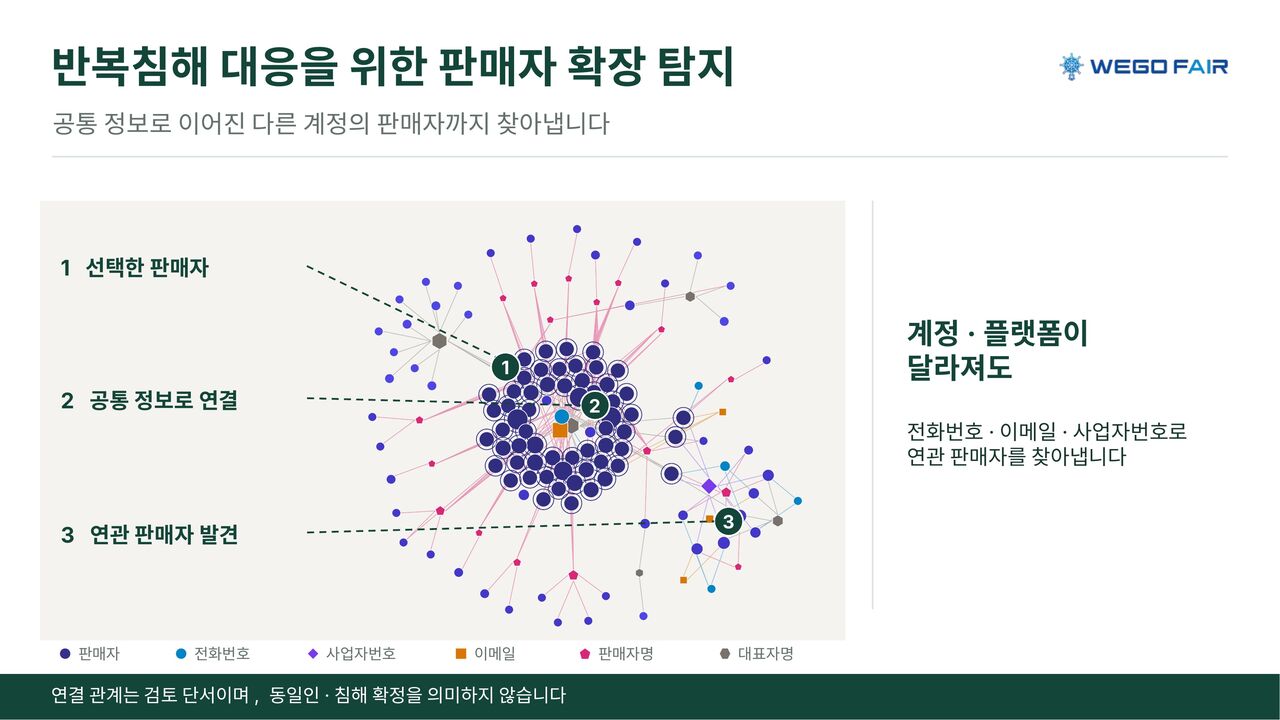
Wigofair also introduced an upgraded illegal-seller detection function that identifies sellers who reappear as the same seller after changing names or moving platforms. It also unveiled test purchases that directly buy suspected products to confirm authenticity, and infringement detection in off-market spaces such as social media and video.
Wigofair said it will execute its growth strategy in 2027 along three axes: product, business and organisation. On the product side, it will focus on an MCP server-based AI agent service and building a database of related information on illegal sellers. On the business side, it will enter the European and Japanese markets and expand its domestic customer base from a focus on fashion and beauty to manufacturing and financial industries. It plans in particular to strengthen monitoring of brand and employee impersonation aimed at financial institutions.
It set a 2027 revenue target of 3.5 billion won, including 1.0 billion won from overseas, and said it aims to reach 50 billion won in revenue by 2030 and list on the KOSDAQ.
Wigofair said it will also publish three indicators each year: "infringement exposure time," the time it takes for infringing posts to be deleted after being detected; "enforcement coverage," the number of channels and platforms that actually carry out reporting and deletion; and "manager work time."
Wigofair CEO Jong-myeon Kim (김종면) said, "The cause of counterfeits that go back up even after deletion is the seller, not the post." He added, "We will change the enforcement unit to the seller, and the way we work to dialogue, and going forward we will be evaluated not by the number of deletions but by three numbers."
 Chi-gyu Hwang
delight@d-today.co.kr
Keyword
#Wigofair #MCP server #KOSDAQ #Europe #Japan
