
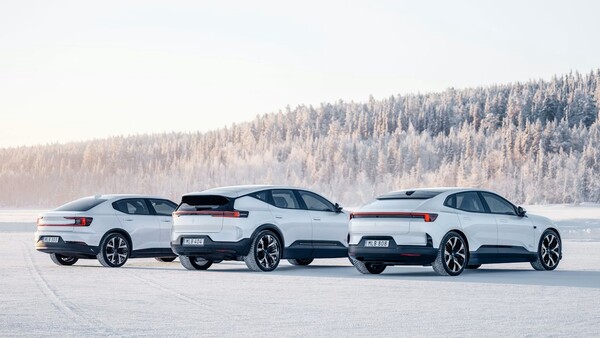
In a survey assessing EV range retention in winter, Swedish electric vehicle brand Polestar ranked first, beating Tesla. In model-by-model results, Tesla still showed strength, while Hyundai Motor’s Ioniq 6 and Ioniq 5 also made the top tier.
On Nov. 25, local time, InsideEVs reported that U.S. EV battery analytics firm Recurrent released results of its “2026-2027 winter EV range survey” based on analysis of real-world driving data from more than 59,000 vehicles across 43 EV models.
The survey was conducted using each model’s maximum driving range recorded at an ideal temperature of about 21 to 27 degrees, rather than U.S. Environmental Protection Agency (EPA) certified range.
By brand, Polestar ranked first with average range retention of 88 percent at 0 degrees and 83 percent at minus 7 degrees. Tesla took second with 85 percent and 77 percent, respectively, followed by Audi with 79 percent and 71 percent. Hyundai Motor and Kia each posted 78 percent at 0 degrees.
Among individual models, post-2021 Tesla Model S vehicles equipped with a heat pump ranked first with 90 percent range retention at 0 degrees. The Cybertruck at 89 percent, Polestar 2 at 88 percent and Model X at 87 percent followed.
Hyundai Motor’s Ioniq 6 and Ioniq 5 ranked ninth and 10th with 82 percent and 81 percent, respectively. By contrast, the pre-facelift Toyota bZ4X was last at 70 percent. The average retention rate for all vehicles in the survey was 78 percent at 0 degrees and 69 percent at minus 7 degrees.
A heat pump was cited as the key technology to narrow winter range gaps. Recurrent said heat pumps can increase EV driving range by up to 8 percent at 0 degrees. Preconditioning, which warms the cabin before departure while connected to a charger, also helps reduce battery consumption.
Recurrent said it plans to sequentially release winter driving performance results for new EVs, including Hyundai Motor’s Ioniq 9 and Rivian R2, once it secures additional data in January 2027.
 Choi Jae-won
ittt_0801@d-today.co.kr
Keyword
#Polestar #Tesla #Recurrent #Hyundai Motor #EPA
