
[DigitalToday reporter Jinju Hong (홍진주)] In the semiconductor industry, tape-out is regarded as an important milestone in chip development, but it does not mean shipment of a finished product or commercialisation. It is closer to meaning that the design has been completed and delivered to a manufacturer. Before an actual product reaches the market, it must go through multiple steps, including fabrication, packaging, verification and mass production.
On Nov. 24 (local time), blockchain outlet The Defiant explained the differences among tape-out, fabrication, packaging, qualification testing and mass production, which are often easy to confuse in the semiconductor development and production process. Each stage carries a different meaning, and completing one stage does not guarantee the next, it said.
Tape-out comes first. It is the procedure of finishing semiconductor design work and handing design data to a manufacturer. It means the design is ready to move to the manufacturing process, but it does not mean the actual chip has been produced or is ready to be delivered to customers.
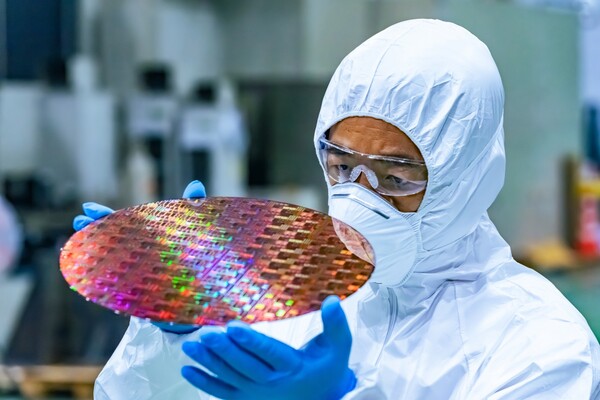
Next comes the fabrication process of forming circuits on a wafer. In the fabrication stage, designed circuits are implemented as an actual semiconductor. But producing chips from a wafer does not mean they can immediately be used as finished products.
Chips that have been produced must go through packaging. Packaging is the stage of assembling a semiconductor so it is protected from external shocks and the environment and can be electrically connected to other components or systems. Chip fabrication itself and the work of making it into a form that can be mounted in a product are treated separately.
After packaging, qualification testing is carried out. This is the procedure of checking whether the chip properly delivers its designed performance and meets required reliability and stability standards. It also includes checking whether it operates normally in real-world use environments. That is why a chip whose design is complete and hardware that has passed various tests are treated as different stages.
Finally, products that have completed qualification testing enter the mass production stage. Mass production is the process of establishing a system that can produce verified chips on a large scale and supply them to the market. Unlike initial fabrication or prototype production, stable quality and production scale must be secured.
For this reason, even if a company announces a tape-out for a particular semiconductor or says it has entered fabrication, it should not be interpreted as an immediate product launch or large-scale shipment. Follow-on procedures such as packaging and verification may still remain before actual supply.
These distinctions are especially important when interpreting semiconductor companies' technology announcements and product release schedules. In the market, design completion or the start of initial fabrication is sometimes taken as a signal that commercialisation is near. But the timing of actual product supply can vary depending on progress in each follow-on stage.
Ultimately, it is difficult to judge a semiconductor development schedule by a single milestone. To more accurately gauge a product's level of completion and when it will be supplied to the market, it is necessary to confirm how far each stage has progressed, from tape-out to fabrication, packaging, qualification testing and mass production.
 Jinju Hong
hongjj@d-today.co.kr
Keyword
#Tape-out #The Defiant #semiconductor #wafer #packaging
