
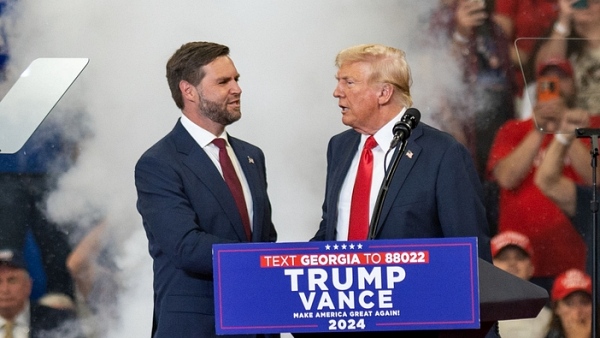
JD Vance (JD 밴스), the U.S. vice president, said Nvidia CEO Jensen Huang (Jensen Huang) was not a target of a Justice Department investigation.
On Nov. 25, business outlet CNBC reported that Vance told reporters in Ohio that he had been told by U.S. Attorney General Todd Blanche (Todd Blanche) and national security officials that Huang was not under any investigation.
Vance said he had heard from Justice Department officials and several national security officials that Huang was not a target. He stressed that Huang was not facing an imminent indictment and had not been under investigation in the first place.
The remarks came after U.S. President Donald Trump said in a CNBC interview two days earlier that Huang had been investigated. At the time, Trump said, in response to questions about Nvidia semiconductors entering China, potential violations of U.S. export controls and possible criminal liability for Huang, that the matter had been investigated thoroughly and that Huang himself was found to have done nothing wrong.
Reuters reported on Nov. 25 that the Justice Department had not conducted a formal investigation into Huang. The report said Blanche did not find evidence that Huang broke the law during investigations into Nvidia customers Super Micro Computer and Megaspeed International. It also said there was no evidence confirmed in that investigation that Huang acted for China or deliberately handed over sensitive semiconductor technology to China. Nvidia was not a target of that investigation and was known to have cooperated with it.
Blanche also avoided giving a clear answer on Nov. 24 when asked whether Huang was under investigation. He said only that Trump had exchanged views with various people before recommending to the board that Huang return as CEO.
Huang returned as Nvidia CEO on Nov. 23. Nvidia's board said it had received views from senior U.S. government officials that Huang was not a national security risk. Trump also said he played a role in Huang's return.
Vance stressed that Nvidia semiconductors play an important role in the U.S.-China AI race. He said the government had a strong interest in ensuring the chips do not fall into the wrong hands, and said it was an opportunity for Nvidia to focus on complying with U.S. export controls. He added that Huang would also take it "very seriously."
Trump left open the possibility of a pardon for Huang in a New York Post interview on Nov. 24, but Vance said a pardon was not necessary. He said he had not seen evidence that Huang committed a crime, and that if there were evidence, it would be for the relevant authorities to decide whether to indict.
Huang resigned after a New York Times report raising suspicions related to his private life. The report included his relationship with Alice Huang (앨리스 황), a Chinese businesswoman and former executive at Singapore-based cloud company Megaspeed, who is suspected of having ties to Chinese intelligence agencies. Allegations were later raised that Nvidia AI semiconductors were brought into China through indirect routes and supplied to local companies.
Separately, Huang is scheduled to attend a closed-door meeting with a House committee on Dec. 1 over matters including his business ties with Megaspeed. Around the same time, Nvidia will hold its annual conference in Washington and unveil new technology.
 Seung-a Yoo
ysah@d-today.co.kr
Keyword
#JD Vance #Jensen Huang #Nvidia #Donald Trump #U.S. Justice Department
