
The U.S. government has blocked Chinese companies from remotely accessing Nvidia high-performance artificial intelligence chips through overseas data centres, sending shockwaves through the GPU resale market. Nvidia GPUs secured to meet Chinese demand for rented capacity are being dumped onto the market as sellers look for new buyers.
CNBC reported on Nov. 25 that listings for Nvidia GPUs have risen unusually since the U.S. government announced the regulations on Nov. 16. The restrictions cover not only direct purchases by Chinese firms but also renting high-performance GPUs in third-country data centres for remote use, disrupting existing deal structures.
The Commerce Department’s Bureau of Industry and Security issued an interim final rule aimed at blocking Chinese firms from trying to circumvent export controls, and the measures took effect on Nov. 19. That means Chinese companies are also constrained from remotely accessing Nvidia GPUs installed in third-country data centres such as those in Southeast Asia.
GPU trading platforms are also seeing changes. Jack Duhamel of AI infrastructure marketplace GPU Mart said the new rules are behind the recent surge in listings. He said a chip seller expressed an intention to sell and said the deal was related to the new regulations.
The supply hitting the market is believed to be inventory secured in anticipation of Chinese demand for rented overseas data-centre capacity. Two people, who asked not to be identified, said sellers are seeking new buyers to offload GPUs that were meant for Chinese companies.
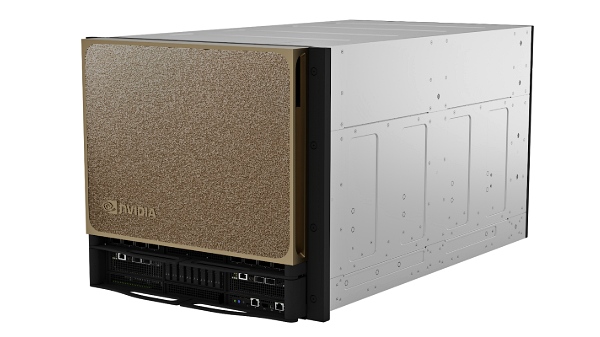
Deals involving thousands of Nvidia’s next-generation high-performance AI chips, the B300 GPUs, have also been offered to the market since the regulatory announcement, according to reports. That leaves large volumes secured on the assumption of China-related demand needing new outlets.
The U.S. government has stressed the measures are meant to close loopholes in existing export controls. Jamieson Greer (제이미슨 그리어), the U.S. trade representative, appeared on CNBC’s “Squawk Box” and said the goal of the new rules is to block routes used to evade export controls.
Greer said top-end AI chips such as Blackwell could already not be sold directly to China. He said the new rules aim to block indirect routes of use, including smuggling through Southeast Asia or remote access using third-country data centres.
Pressure from U.S. restrictions on Nvidia linked to China also appears to be growing. The U.S. Congress is advancing a remote access security bill. It has passed the House and is awaiting a Senate vote. If implemented, it would allow the U.S. government to more broadly control Chinese companies’ access to cloud services.
Nvidia has previously warned customers that if the bill takes effect, the U.S. government’s authority to control access to cloud services could expand, and related companies could be exposed to legal action, according to reports.
The U.S. government has also raised issue with cases of Chinese AI companies gaining access through indirect routes. In July it pointed to China AI lab Moonshot AI accessing Nvidia chips through a facility in Thailand. On Nov. 5, there were reports suggesting Moonshot AI also tried to access GPUs through European data centres.
Nvidia declined to comment on the matter. Colette Kress (콜레트 크레스), Nvidia’s chief financial officer, said in a third-quarter earnings conference call on Nov. 17 that the company was reviewing the rules. She said overall performance is expected to remain solid as chip demand far exceeds supply.
The new restrictions are affecting not only curbs on semiconductor exports to China but also the overseas data-centre rental market and the high-performance GPU resale market. With Nvidia GPUs secured for China-related demand increasingly likely to move in search of new buyers, changes are expected in the global AI infrastructure supply chain and GPU distribution market.
 Jinju Hong
hongjj@d-today.co.kr
Keyword
#Nvidia #B300 #U.S. Commerce Department #Bureau of Industry and Security #CNBC
