
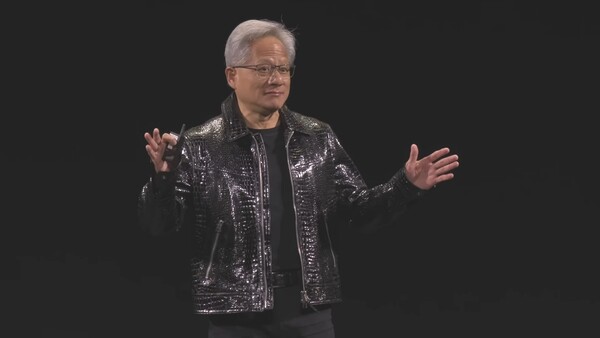
Nvidia CEO Jensen Huang (황젠슨) has returned to the management front line, but prospects are emerging that it will be difficult for him to maintain an aggressive stance in the China market as before. That is because U.S. government controls on advanced semiconductor exports are being tightened and national security concerns in Congress over Nvidia's China business are spreading.
On Nov. 25, the South China Morning Post (SCMP) reported that Huang has visited China several times over the past 2 years, encouraging local employees and stressing Nvidia's willingness to support China's AI industry.
But expectations are emerging that constraints will also apply to Huang's China-related activities after Nvidia's board recently set up a national security and export-control oversight committee made up of outside directors and began recruiting a chief compliance officer (CCO).
Chelsey Tam (첼시 탐), a senior equity analyst at Morningstar, forecast that it would be difficult for Huang to publicly argue as strongly as before for the need to sell semiconductors to China. Analysts also say the U.S. government could further tighten restrictions on AI technology transfers to China.
The United States has already moved to reduce blind spots in export controls. The Commerce Department's Bureau of Industry and Security (BIS) has required separate authorisation since Nov. 19 for supplies of advanced semiconductors to overseas data centres that remotely provide computing power above a certain scale to companies in China and other regulated countries.
On Nov. 23, it added seven entities, including Singapore cloud computing firm Megaspeed and related companies, to an export-control list over suspected indirect supplies of advanced semiconductors to China.
Pressure from the U.S. Congress is also intensifying. Huang will attend a closed-door meeting on Dec. 1 with the House Foreign Affairs Committee, the House Intelligence Committee and the House Select Committee on the Chinese Communist Party, and will appear on Dec. 3 at a public hearing of the Senate Banking Committee on semiconductor export controls.
Congress is also continuing discussions on legislation such as the AI OVERWATCH Act, which would strengthen congressional oversight authority over exports of advanced AI semiconductors, and the Chip Security Act, which would prevent smuggling through chip location tracking.
Nvidia said at its earnings release on Nov. 17 that it had halted shipments to China of Hopper architecture-based data centre semiconductors, including the H200. It also did not reflect revenue from computing products for China's data centre market in its fiscal 2027 fourth-quarter outlook.
By contrast, U.S. Treasury Secretary Scott Bessent (스콧 베선트) said there had been no change in the policy of allowing exports of the H200 to China. President Donald Trump also mentioned the possibility of selling Blackwell semiconductors to China within the next 2 to 3 years.
With differences in views sharpening between the U.S. administration and Congress over semiconductor policy toward China, uncertainty surrounding Nvidia's China business is expected to persist for the time being even after Huang's return.
 Jae-won Choi
ittt_0801@d-today.co.kr
Keyword
#Nvidia #South China Morning Post #BIS #AI OVERWATCH Act #Chip Security Act
