
Chinese game companies are moving to secure fandom in the South Korean market even before launching new titles, through offline events and support for secondary creative activities. The strategy is seen as aimed at securing long-term service competitiveness beyond an initial hit.
◆ Chinese game firms at G-Star...from existing fandom to new titles
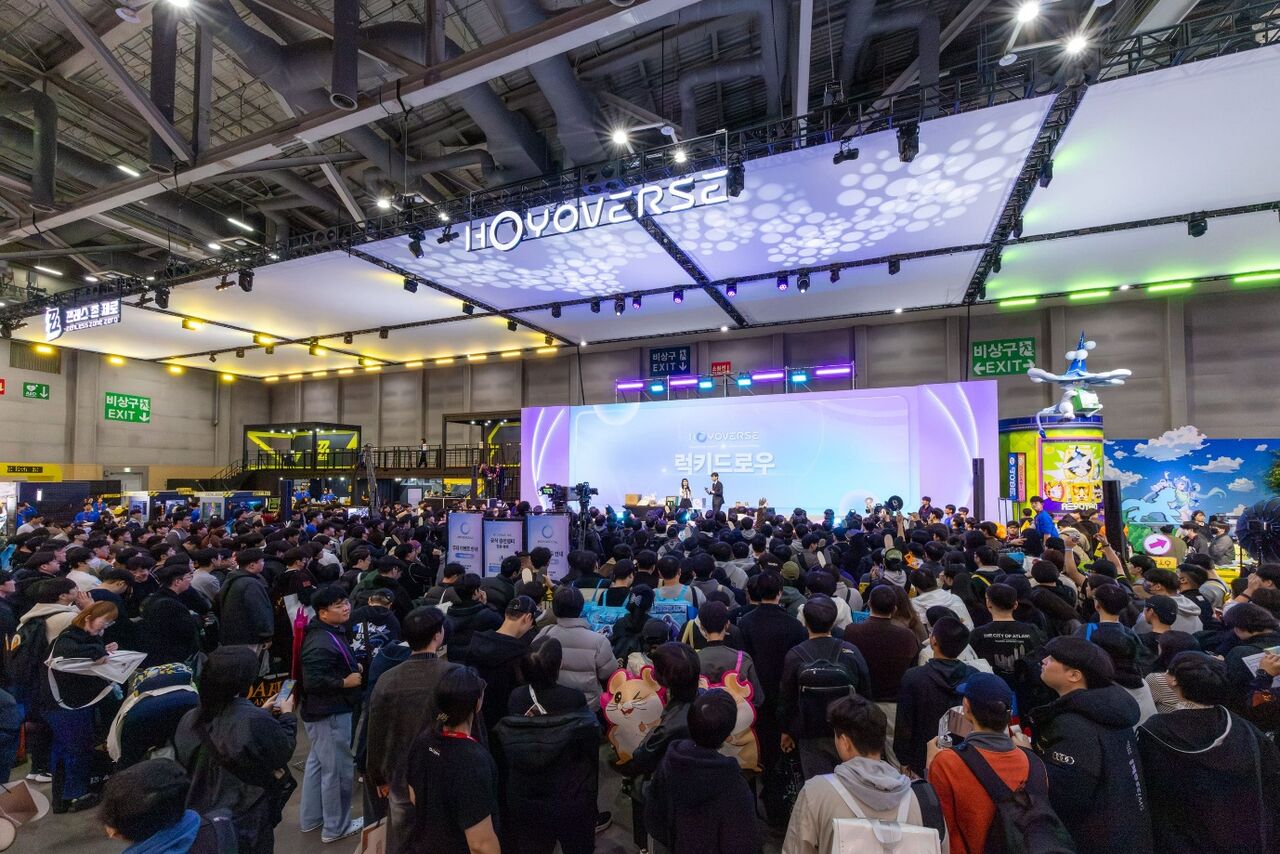
According to the industry on Nov. 26, HoYoverse returned to G-Star 2026, held at BEXCO in Busan from Nov. 19 to 22, after 4 years. It set up an exhibition area of 100 booths and ran South Korea's first offline demos of its new titles "Petit Planet" and "Honkai: Nexus Anima". It also ran experience and stage programmes using existing titles "Genshin Impact", "Honkai: Star Rail" and "Zenless Zone Zero".
The setup allowed users who play its existing games to experience new titles in the same place. HoYoverse has expanded touchpoints with its domestic fandom through its own offline events, including "HoYoLand".
Hwang Ran (황란), head of HoYoverse Korea, earlier this month explained at a media briefing how the goals of HoYoLand and participation at G-Star differ. HoYoLand was an event for existing fans, while G-Star was a venue to introduce differentiated new titles to domestic users. She also said the company would focus on user feedback rather than the number of visitors or demo participants.
After G-Star closes, HoYoverse is also accelerating preparations to launch new titles. It started the final beta test for "Honkai: Nexus Anima" the previous day, and plans to officially launch the life simulation game "Petit Planet" in the global market on Dec. 4.
Chinese game company NetEase also ran separate booths at G-Star for its new title "Sea of Remnants" and existing titles "Yan Yun" and "Once Human". It is a method that combines promoting new titles with managing existing users.
Lee Jun-ho (이준호), an analyst at Hana Securities, said in a "G-Star 2026 Review" report, "The biggest change from last year is Chinese game companies operating demo booths for new titles." He analysed that this year the event was used to check South Korean user reactions before launch and strengthen local operations for existing titles.
◆ Supporting fan-made content even before launch...focus on building fandom
There are also cases of securing fandom through cooperation with South Korean game companies. A representative example is the fantasy world RPG "Azur Promilia", developed by China's Manjuu Games and serviced in South Korea by Nexon.
Azur Promilia, which is set for an official domestic launch, has expanded touchpoints with domestic subculture users starting several months before launch.
In March, Nexon participated as the main sponsor in "Comic World 330 Ilsan", a comics and animation doujin event, for the first time among game companies. It created a themed space that implemented the game's worldview and a rest area for visitors, and also ran programmes that creators could join.
It later opened a dedicated Azur Promilia channel on the content platform "Nexon Peak" so users could share a wide range of fan-made works, including illustrations, comics and cosplay. It also ran a drawing contest using game characters as the subject until the official launch date.
Recently, it has run outdoor advertising at major hubs including Gangnam, Hongdae, Yongsan and Gwanghwamun in Seoul, and on Subway Line 2. It also created a participatory event that encouraged users to take photos of the ads and share them on social media, aiming to spur the voluntary spread of game-related content.
After launch, it will participate in the subculture event "AGF 2026" to be held at KINTEX in Goyang, Gyeonggi Province, from Dec. 4 to 6. It plans to display users' creative works at the venue, linking online creative activity to an offline setting.
While HoYoverse is expanding fandom built through existing hit titles to new games, Manjuu Games and Nexon are using domestic subculture events and creator communities to form a new fandom even before launch.
◆ Beyond localisation to securing fandom...building a base for long-term success
Chinese game companies are putting effort into offline events and community management in the domestic market because, beyond localising games, building an ongoing relationship with users is also important.
Pre-launch demos allow them to gauge domestic user reactions, and offline events and community activities can keep interest in the game going until launch. For subculture games in particular, voluntary creative activities such as fan art and cosplay can also help raise awareness of the game.
An industry official said, "As competition among new titles intensifies even in the domestic market, it is becoming difficult to secure users with only game quality and localisation." The official said, "Chinese game companies engaging with domestic users and trying to form fandom even before launch is a strategy to secure not only an initial hit but also long-term service competitiveness."
 Hojeong Lee
lhj@d-today.co.kr
Keyword
#HoYoverse #G-Star 2026 #NetEase #Nexon #Azur Promilia
