
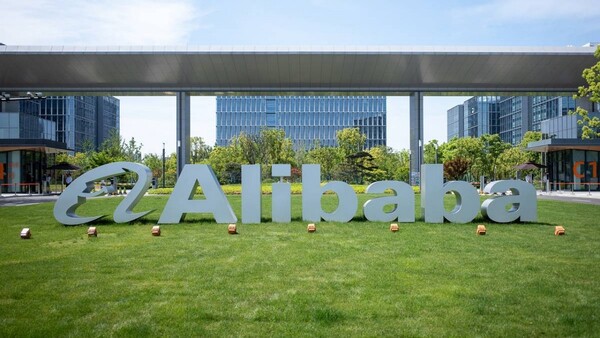
Alibaba is deploying its self-developed AI semiconductors to train next-generation AI models, accelerating a shift in infrastructure toward China-made chips. It is a strategy to respond to U.S. restrictions on exports of advanced semiconductors while strengthening the growth base of its AI cloud business.
On Nov. 19, the South China Morning Post (SCMP) reported that Alibaba disclosed strong growth in its AI cloud business and progress in developing its own semiconductors in its fiscal 2026 third-quarter results announced that day.
Alibaba Chief Executive Eddie Wu (우 에디) said at the earnings announcement, "Infrastructure using our self-developed chips is becoming the foundation of a 'full-stack AI' strategy that integrates AI models, cloud and application services." He added, "Development of our own chips is progressing faster than initially expected." He forecast that most AI models developed by Alibaba and its partners will use China-made semiconductors for pre-training and post-training.
The results also exceeded market expectations. Revenue for the quarter ended Sept. 30 rose 10 percent from a year earlier to 271.5 billion yuan (54.3 trillion won). Net profit jumped 213 percent to 64.4 billion yuan (12.9 trillion won), and adjusted EBITA rose 260 percent to 32.6 billion yuan (6.5 trillion won).
The sharp rise in net profit was significantly influenced by an increase in valuation gains on investment assets. Adjusted net profit, excluding one-off factors such as investment gains and losses, rose 92 percent to 19.9 billion yuan (4.0 trillion won).
Revenue from AI cloud and computing services rose 53 percent to 61.0 billion yuan (12.2 trillion won). Revenue from external customers rose 64 percent, and recurring revenue within that climbed 67 percent. Revenue from AI-related products extended triple-digit growth for 13 consecutive quarters.
Alibaba is developing its next-generation AI chip, Zhenwu V900, through its chip design unit T-Head. The chip is scheduled for a commercial launch in the first quarter of 2027. On Nov. 16, it also unveiled a new AI model, Qwen4-Max.
Additional U.S. export restrictions remain a variable. Wu forecast cloud revenue growth of 30 to 45 percent in 2027, but said it could recover to above 50 percent in 2028 as the supply of China-made computing resources expands.
Over the long term, Alibaba set a goal of reaching $100 billion in external cloud revenue in 2030 (133.6 trillion won). It also mentioned the possibility of lowering its long-term data centre power capacity target of 20 gigawatts, depending on changes in global semiconductor regulations.
Alibaba's capital expenditure this quarter was 50.5 billion yuan (10.1 trillion won), focused on building AI infrastructure. The company plans to improve investment efficiency while expanding supply of its own semiconductors and to push for a return to positive free cash flow.
 Jae-won Choi
ittt_0801@d-today.co.kr
Keyword
#Alibaba #T-Head #Zhenwu V900 #Qwen4-Max #South China Morning Post
