
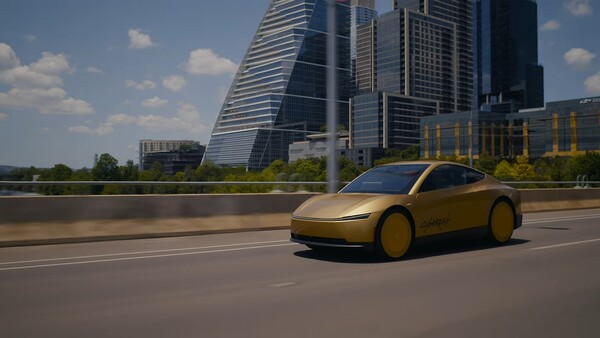
[DigitalToday reporter Jae-won Choi] Tesla has expanded the operating area of its driverless Cybercab robotaxi, which has no steering wheel or pedals, to Dallas, Texas. The move marks its entry into a second city about two months after it began its first service in Austin in September (local time).
On Nov. 19, InsideEVs reported that Tesla announced the start of Cybercab operations in Dallas through its official X (Twitter) account.
Cybercab is a two-seat electric vehicle designed exclusively for self-driving. It has no steering wheel or accelerator and brake pedals, and features butterfly doors that open on both sides and a large touchscreen. Users can summon a vehicle through the Tesla robotaxi app on a smartphone. Riders cannot directly choose between Cybercab and the existing Model Y robotaxi, and allocation is determined by the number of passengers and vehicle availability.
Tesla has already operated a Model Y-based robotaxi service in Dallas. This time, it expanded its fleet by deploying Cybercab, a dedicated self-driving vehicle, for the first time.
Cities where Cybercab is currently available are Austin and Dallas, and rides are limited to some designated areas in each city.
Tesla is expanding its robotaxi business mainly in Texas and Florida. It provides services using the Model Y in Houston, Fort Worth, San Antonio, Miami, Orlando and Tampa.
It also operates a ride-hailing service in the San Francisco Bay Area, but in California it is operating with a safety driver on board.
Tesla Chief Executive Elon Musk (일론 머스크) has set a long-term goal of operating 2,000,000 Cybercabs in the United States. To do so, it plans to end Cybertruck production at its Texas gigafactory by late summer 2027 and expand Cybercab production.
It is also pursuing sales to individual customers. Tesla has sent invitations since Nov. 13 to some customers to buy a Cybercab for $29,990 (about 40,036,700 won).
To use the vehicle, however, users must subscribe to a self-driving service that costs $299 a month (about 399,200 won), and operating areas are limited to zones designated by Tesla.
Regulatory issues also remain. The U.S. National Highway Traffic Safety Administration (NHTSA) is investigating whether Cybercab, which has no steering wheel or pedals, meets federal motor vehicle safety standards.
Tesla is expanding the operation and sales of driverless robotaxis, but verifying compliance with safety standards and limited operating areas remain challenges for future business expansion.
Cybercab expands to second city
 Jae-won Choi
ittt_0801@d-today.co.kr
Keyword
#Tesla #Cybercab #Dallas #Austin #NHTSA
