
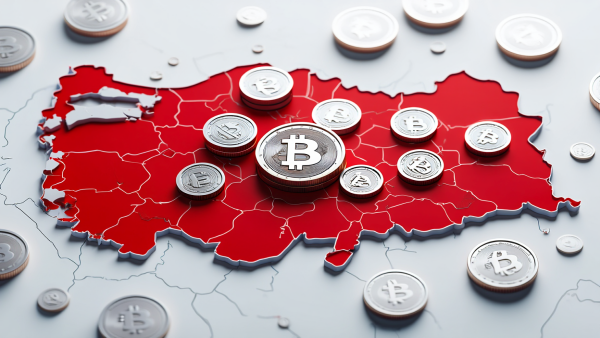
Turkiye is showing the world's highest level of stablecoin demand, but it still lacks a separate legal framework that directly addresses it, blockchain outlet Cryptopolitan reported on Nov. 11 local time.
The Financial Stability Board (FSB) recommended in a peer review report that Turkish authorities establish a dedicated regulatory regime for stablecoins.
The assessment was based on data through August 2026. The FSB said Turkiye has already set up an institutional framework for cryptoassets overall, but there are still blind spots in its supervisory system. It specifically noted there is no separate framework for stablecoins yet.
The key is the scale of demand. Chainalysis figures compiled in 2024 showed Turkish users' stablecoin purchases amounted to 4.3 percent of gross domestic product. That is higher than Thailand, Georgia and the United States. Demand for stablecoins such as dollar-pegged Tether's USDT was attributed to demand to respond to local inflation and a weakening lira. Another main factor cited was use in funding accounts on overseas exchanges.
A supervisory vacuum was also highlighted. Turkiye began weekly reporting from early 2026 through KVMKS, a central registration system for cryptoassets, but it collects data only from domestically licensed platforms. The FSB said it cannot capture funds held at overseas exchanges and in self-custodied wallets. Registered platforms in Turkiye can offer only spot trading, so demand for leverage or derivatives naturally moves to overseas platforms.
The market is already sizable. Turkiye is among the world's top 20 crypto markets with annual trading volume of about $200 billion. As of 2025, dollar-pegged stablecoins accounted for about 17 percent of on-chain transactions. By contrast, the market capitalisation of BiLira's TRYB, a local lira-based stablecoin, was only about $5.9 million.
The FSB urged Ankara to create a stablecoin-specific regime that includes reserve assets and redemption rules. It recommended that issuers keep token values close to the reference currency, manage reserve assets transparently and guarantee holders the right to redeem into cash in a timely manner. Some rules exist from MASAK, the Financial Crimes Investigation Board, that set limits on stablecoin transfers, but the FSB viewed that as insufficient.
It also cited delays in the licensing process. The FSB said progress in overall licensing is slowing due to bottlenecks in audit capacity and custody infrastructure, and recommended publishing a timetable for each step. Although a regulatory framework is in place, a significant share of actual trading flows is moving overseas and into self-custodied wallets, so Turkiye's next task is expected to focus on creating new rules and expanding the scope of supervision.
Security is also a burden. BtcTurk, Turkiye's largest trading platform, has suffered three breaches in the past 2 years, and lost about $48 million in the most recent incident. With trading demand growing rapidly and gaps in supervision and inadequate infrastructure coming into view, stablecoin discipline and overhauling the licensing system are emerging as key variables for Turkiye's crypto market.
 Jinju Hong
hongjj@d-today.co.kr