
The government will give market participants sufficient time to prepare as it pushes to shorten the settlement cycle in the domestic securities market. It will switch after integrated testing lasting at least six months.
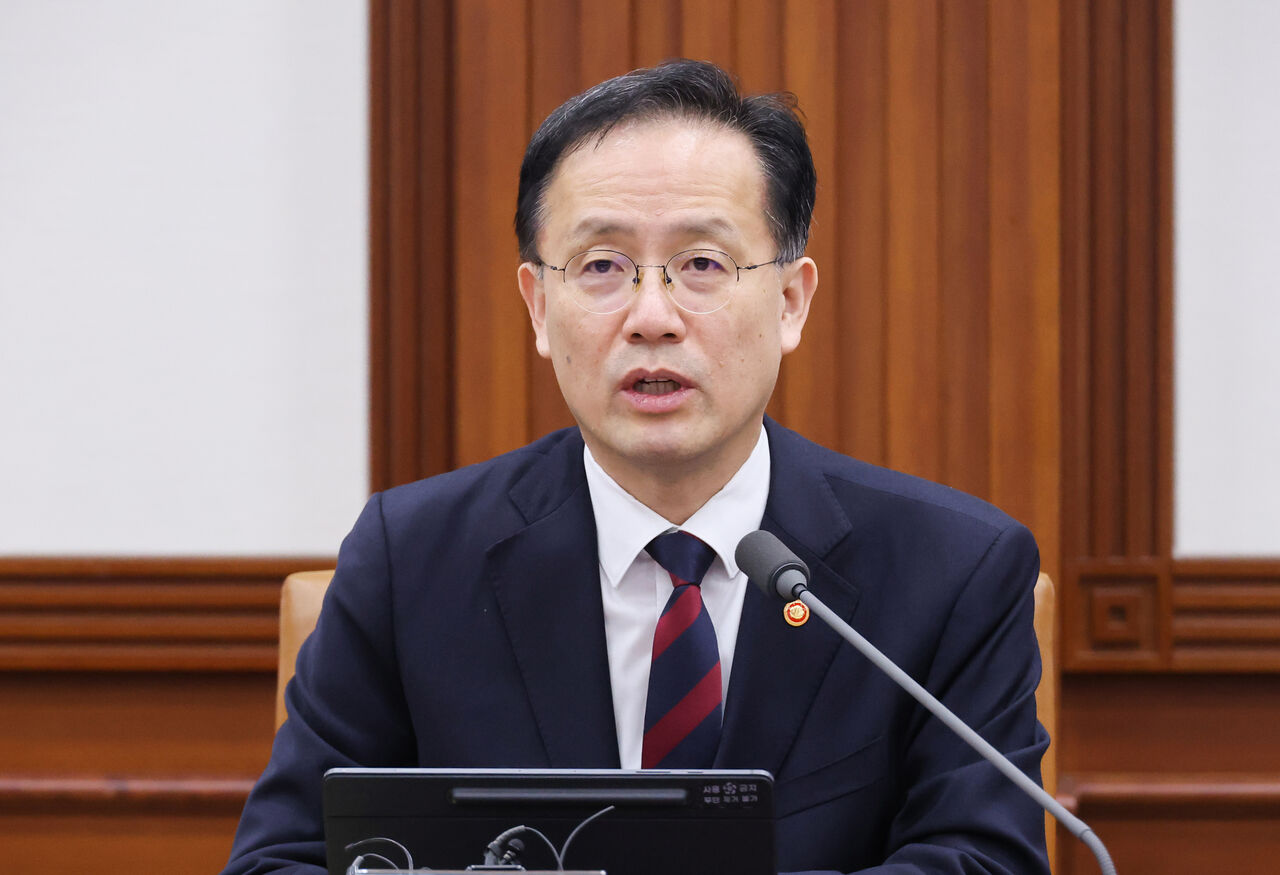
The Ministry of Economy and Finance said on Tuesday it explained a draft “securities market settlement cycle shortening (T+1) roadmap” announced on Nov. 3 and heard views from global investors at the third meeting of the Global Core Investor Consultative Group held the previous day. The meeting was chaired by Moon Ji-sung (문지성), director-general for international economic management.
The meeting was attended by major global asset managers such as BlackRock, Vanguard and Amundi, as well as the Asia Securities Industry & Financial Markets Association (ASIFMA) and the Global Foreign Exchange Division (GFXD).
From South Korea, the Ministry of Economy and Finance, the Financial Services Commission, the Bank of Korea, the Financial Supervisory Service, the Korea Exchange and the Korea Securities Depository took part.
The government and related agencies plan to build an automated infrastructure for trading and settlement information in line with a shorter settlement cycle. They aim to provide enough time for domestic and foreign financial firms to overhaul systems and work processes.
Before the system switch, they plan to carry out integrated testing for at least six months. They will then check market readiness before moving ahead with the actual transition.
Global investors conveyed concerns that a shorter settlement cycle could increase workloads and lead to difficulties in the settlement process.
They said necessary steps for implementation should be discussed and supplemented on an ongoing basis, including preparing response measures in the event of settlement failures.
The government also explained the status of foreign exchange market rule changes aimed at improving foreign investors’ access to the domestic market.
At the end of last month, a Singapore-based financial investment firm became the first to invest domestically using the “offshore won settlement system” that is currently being piloted.
The number of registered institutions under the Registered Foreign Institution-Korea (RFI-K) scheme increased to 11 from 6 as of September.
Major global financial institutions are also set to join in early next year the Bank of Korea’s direct participant institutions on its international network, which currently includes four domestic banks: KB Kookmin, Shinhan, Woori and Hana.
The government asked overseas financial institutions to broaden participation ahead of the formal launch of the Bank of Korea international network in January next year.
The threshold requiring prior reporting to the ministry when local units of foreign securities firms borrow won overseas was raised to 50 billion won a year from 1 billion won.
Global investors assessed the measures positively. They also said more is needed to increase practical use in the investment process, including improving financial institutions’ work processes, adjusting some trading practices and clarifying operating standards.
A ministry official said, “We will continue to check and prepare improvement measures so that the outcomes of foreign exchange and capital market institutional reforms can be used and felt in the actual investment process.”
 Sangyeop Oh
yub@d-today.co.kr