
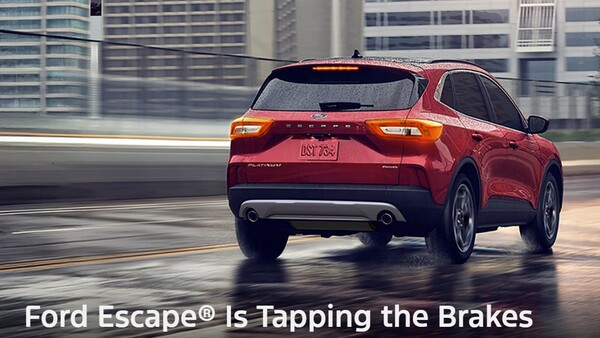
Ford's decision to end production of its compact sport utility vehicle (SUV) Escape has drawn attention to whether it could return as a battery-electric model. Some are saying Ford could keep the Escape nameplate alive by using a next-generation EV platform, but a specific successor has not been confirmed.
CleanTechnica recently reported that Ford's official U.S. website describes the Escape as "taking a break." Because it does not explicitly state permanent discontinuation, some interpret the wording as leaving open the possibility of reusing the name in the future.
Production of the Escape and the Lincoln Corsair ended in December last year at Ford's Louisville plant in Kentucky. Ford is converting the plant into a next-generation EV production facility. Sales of existing inventory are continuing, but the 2026 Escape cannot be purchased in six states including California and New York due to emissions certification issues. Ford directed customers to the Bronco Sport and Explorer as alternative models.
The possibility of an EV transition is tied to Ford's new-vehicle strategy. Ford plans to launch the midsize electric pickup Fathom in 2027 based on a new universal EV platform. The starting price is $28,350. With a compact electric SUV on the same platform also being signaled as a follow-up model, the possibility of inheriting the Escape name is being discussed.
Still, it is difficult to be certain about a return as an EV. In August, U.S. auto industry reports said Ford would launch an affordable SUV in 2029 using gasoline and hybrid powertrains. There is also word that Ford executives told dealers the company would maintain its hybrid strategy.
Speculation about an electric Escape has circulated since 2022, but whether it will be commercialised remains unclear. Whether Ford will use the Escape name for a new electric SUV or fill the gap with a separate internal combustion engine and hybrid model will depend on its future new-vehicle strategy.
 Jae-won Choi
ittt_0801@d-today.co.kr