
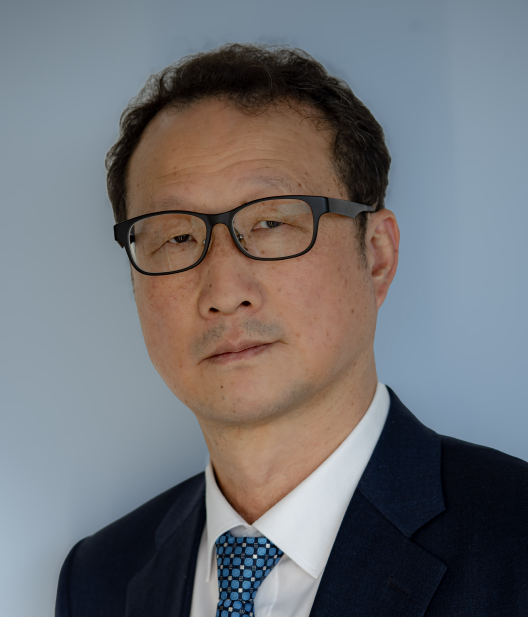
South Korea's Ministry of Science and ICT said on Nov. 2 that Jung Cheon-young (정천영), head of the quality management division at the ITER Organization, was appointed deputy director-general effective Nov. 1. The term runs for five years, until Oct. 31, 2031.
ITER is an international science and technology cooperation project jointly pursued by seven members — South Korea, the United States, the European Union, Japan, China, India and Russia — to verify the feasibility of fusion energy. The ITER Organization carries out the project based on decisions by a council formed by the seven members. Its top management consists of a director-general and five deputy director-generals by field.
Jung, the new deputy director-general, will head the engineering services department and oversee engineering support and technical coordination needed for ITER construction and device integration. He joined the ITER Organization in 2013 as a quality management engineer and later served as head of the quality management team and head of the quality management division. He carried out work including establishing quality management strategies, improving management systems and conducting quality audits, covering major equipment from design and fabrication through assembly and construction.
"I feel a heavy sense of responsibility in taking on the important role of deputy director-general for the ITER project, the largest science and technology project for humanity," Jung said. "I will maximise synergy between engineering capabilities and strict quality assurance to ensure the integrity of construction and lead ITER’s completion without gaps," he said.
"This appointment as deputy director-general is a meaningful achievement that recognises the international competitiveness of our fusion technology and specialised workforce," Ku Hyuk-chae (구혁채), first vice minister at the Ministry of Science and ICT, said. "We will support the international joint research experience and technological capabilities accumulated through participation in the ITER project so they can be closely linked with domestic fusion policies such as the seven SEEDs and the K-Moonshot project," he said.
 Jin-ho Lee
jhlee26@d-today.co.kr