
Efforts to mass-produce AI data centres in factories, like cars, are gathering pace. The approach assembles the equipment needed to build a data centre in modular form in advance and installs it on site. It is seen as an attempt to cut build time and costs as demand for AI infrastructure surges.
On Oct. 31, blockchain media outlet Cryptopolitan reported that AI infrastructure company Runware aims to produce 30 megawatts (MW) of data-centre capacity a day by 2028. The company plans to send finished equipment to sites with power and telecommunications infrastructure in place and bring it online within 48 hours.
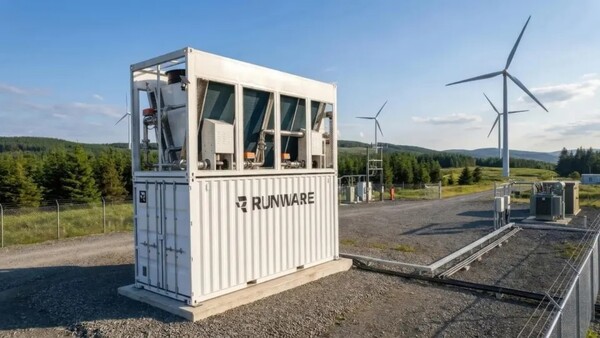
The core idea is to shift the data-centre build process to a factory-centred model. Runware is pushing a method of assembling and testing its modular AI data centre, Sonic Pod, at a factory before transporting it to a site. The plan is to speed up deployment by reducing the work of building facilities piece by piece on site.
Sonic Pod is a 20-foot module that can house about 1,200 graphics processing units (GPUs). Each module provides 1 MW of computing capacity. It uses a closed-loop liquid cooling system that does not require a continuous external water connection.
Runware is currently assembling Sonic Pods in Romania and plans to open a second factory in early 2027. It now takes about 3 weeks to produce a module, but the company says that once an assembly line is fully established, it can be cut to as little as 1 day.
Runware Chief Executive Flaviu Radulescu (플라비우 라둘레스쿠) expects day-scale mass production to be possible once the production system is in place. The company’s 48-hour figure applies not to the entire data-centre build, but to installing and configuring completed equipment on sites where power and telecommunications infrastructure is ready. It does not include the time needed for site preparation and grid connection.
The company is also seeking to secure demand. Runware said it has secured $1 billion in committed interest, equivalent to more than 20 MW of data-centre capacity. Potential customer interest has not yet translated into actual contracts and revenue. The company expects to start mass production in late 2027.
Competition to speed up AI data-centre construction is spreading to other companies. Nvidia unveiled DSX POD, a reference design for its next-generation Vera Rubin system, on Oct. 21. It said that by assembling and testing equipment before shipment and delivering it to customers, installation time on sites with power and infrastructure ready can be reduced to 2 weeks from about 6 months.
Crusoe is also expanding its modular data-centre business. The company runs a factory of about 352,000 square feet in Colorado and supplies AI infrastructure through its Spark platform connected to Crusoe Cloud. It has operated modular facilities since 2020 and has said it can provide usable AI computing capacity in as little as 3 months.
Companies also differ in how they calculate build time, so simple comparisons require caution. Runware’s 48 hours refers to on-site installation and configuration of finished equipment, and Nvidia’s 14 days refers to system deployment time. Crusoe’s 3 months is the time needed to secure computing capacity that can be put into actual operation.
Runware’s business model is also a differentiating factor. It sells AI inference services rather than leasing data-centre space. Customers can supply their own GPUs, but the company relies on Nvidia technology for networking. Its strategy is to expand the business in line with a market where inference demand is rising as well as AI training infrastructure.
Growth prospects for the modular data-centre market are also positive. Research firm Grand View Research forecast the global modular data-centre market will expand to $75.8 billion in 2030 from about $29.0 billion in 2024. Real estate and infrastructure consulting firm JLL estimated global data-centre capacity could reach 200 gigawatts (GW) by 2030 and that about $3 trillion in investment would be needed. JLL forecast that inference demand would become more mainstream than AI training from 2027.
But increasing factory production alone will not resolve all bottlenecks in the data-centre industry. Power supply and securing sites remain key challenges. According to JLL, grid connection waiting times in major markets exceed 4 years. The International Energy Agency (IEA) forecast global data-centre electricity consumption will reach 950 terawatt hours (TWh) by 2030.
Backlash from local communities is another variable. In a Pew Research survey, 54 percent of Americans said data centres have a negative environmental impact. Texas temporarily suspended grid approvals for projects under review in August, and also halted environmental permitting procedures in September.
There are also risks inherent in the mass-production system itself. Electric vehicle startup Arrival struggled to implement a factory-centred mass-production model profitably. Runware must also prove whether it can secure production speed and scale at the same time through an assembly line.
Ultimately, Runware’s task is not limited to assembling data centres quickly. It must secure infrastructure that can support real customer demand and power supply while increasing output. Whether factory-built AI data centres can become a new industry standard depends on whether a mass-production system can be realised.
 Jinju Hong
hongjj@d-today.co.kr