
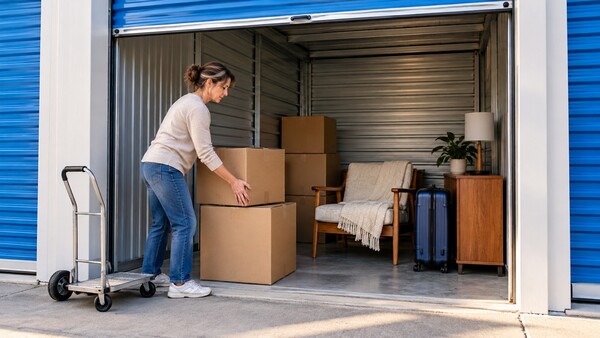
In the United States, self-storage for keeping surplus belongings has grown into a giant industry with annual revenue exceeding $40 billion. Estimates have also put the number of facilities at more than the combined total of major retail and restaurant chain outlets such as Starbucks and McDonald’s.
On Saturday, Japanese media outlet Gigazine, citing U.S. current affairs weekly The New Yorker, reported that the United States accounts for about 90 percent of the world’s self-storage capacity. The chief executive of U.S. storage-space sharing platform Neighbor explained that the number of local self-storage facilities exceeds the combined number of U.S. stores operated by Starbucks, McDonald’s, Walmart, Home Depot, Domino’s Pizza, Dunkin’ and Costco.
Self-storage is a service in which individuals or companies rent independent space to store belongings. The industry calls key drivers that create demand the “four Ds”: death, displacement, divorce and downsizing. It says changes in living conditions create demand to store items people cannot dispose of.
The New Yorker cited parents’ “delusion” that their children will inherit old furniture as a fifth D. It interpreted consumer culture, in which people struggle to throw away unused items, as having expanded the market.
Facilities have evolved from single-story warehouses into multi-story buildings with heating and cooling. Users can compare prices on smartphones and handle contracts and access. Operators use AI to analyse competitors’ rates and adjust rents or respond to customer inquiries. Automatic payments are convenient, but they also make it easy for users to put off cancellations or miss fee increases.
Demand was also supported by a need for space at home for remote work and distance learning after COVID-19, as well as moves being delayed due to higher mortgage rates. More recently, storage sites dedicated to campers and boats, and even “car condos” for luxury vehicles, have emerged.
Still, as facilities surged during the pandemic, some areas have faced oversupply. Self-storage is both a huge market created by U.S. consumer culture and housing changes, and one that also carries profitability pressures from new supply.
 Jae-won Choi
ittt_0801@d-today.co.kr