
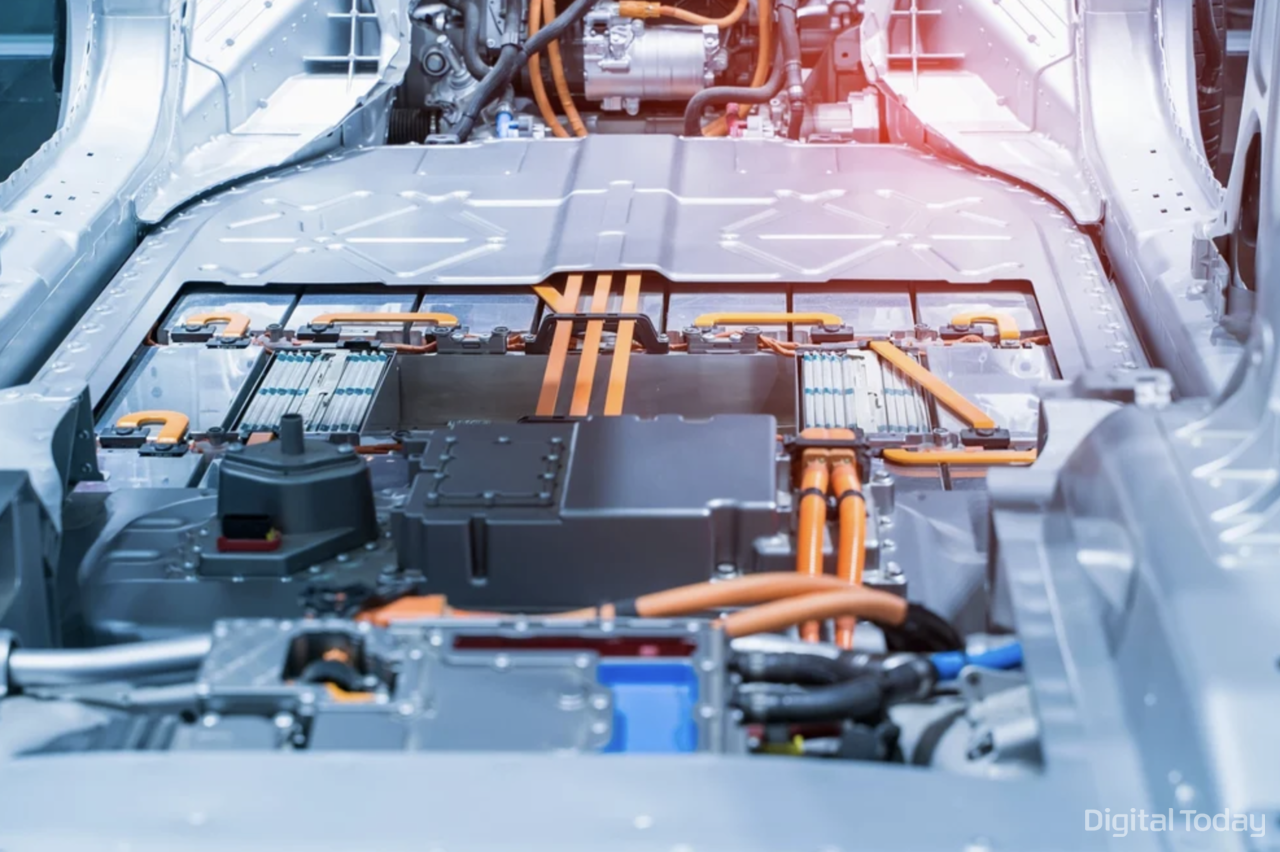
[Digital Today reporter Daegeon Seok (석대건)] The battery industry is expanding its business into services that provide ongoing support after batteries are sold. That is because technology to remotely diagnose battery conditions with artificial intelligence has entered the commercialisation stage, making it possible to manage batteries as data. Still, for the service to expand beyond commercial vehicles such as taxis, insurance standards for calculating residual value and assigning accident liability need to be overhauled.
As of Nov. 2, the industry says the role of battery management systems is being reshaped from showing remaining charge to focusing on prediction, protection and connectivity, including fault prediction and remote management. As AI-based condition estimation is commercialised, the accuracy of predicting state of health and remaining life is also improving. State of health is an indicator of how much battery performance has declined from its initial level and can be used as a basis for valuing used batteries. It has also become possible to detect differences between battery cells or ageing in advance and issue alerts.
Battery diagnostics are also expanding to the cloud outside the vehicle. SNE Research said that as approaches spread that collect and analyse records left by vehicle BMS in the cloud, it has become possible to provide early warnings of abnormal signs and manage maintenance timing in line with remaining life. Under this structure, the in-vehicle BMS handles immediate control while the cloud handles data analysis. In effect, manufacturers can continue to check battery conditions even after selling electric vehicles. The BMS market is expected to grow to $17.6 billion by 2035.
Battery makers are bundling this data into after-sales services. LG Energy Solution operates the electric two-wheeler battery swapping service KooRoo, the battery management service B-Lifecare that analyses driving and charging habits, B.once that evaluates remaining life with a one-time inspection, and the lifecycle integrated management platform B.around. KooRoo monitors the condition of swapped batteries in real time through a cloud BMS. The company explained that battery value can be objectively proven in used EV transactions and that the data it has secured becomes a core asset for its battery as a service business.
Automakers and financial firms are also entering the same market with lease models in which the operator holds battery ownership. The Insurance Research Institute said Kia in July 2023 signed an agreement for a pilot battery subscription service for taxis with Hyundai Capital, Shinhan EZ Insurance and the Seoul Taxi Transport Business Association, among others. Under the model, vehicle owners pay only for the car excluding the battery and pay a monthly battery fee. The Insurance Research Institute said taxis that have difficulty enrolling in own-vehicle damage insurance can take out battery-only insurance, easing the burden of battery operating costs.
Hyundai Motor and Hyundai Capital are pushing a taxi pilot that separates battery ownership from the vehicle body. Hyundai Motor Group said in April it would 추진 a pilot battery subscription service in the first half of this year for 5 corporate taxis in the Seoul metropolitan area whose warranty periods have ended.
Taxis pay Hyundai Capital a monthly subscription fee, and when a battery replacement is needed they return the used battery and receive a battery owned by Hyundai Capital. Corporate taxis rack up long mileage over a short period, leading to faster battery performance degradation and earlier replacement demand. Hyundai Motor Group said it would verify the effects of easing the burden of operating costs and extending vehicle operating periods through the pilot, and plans to also 추진 a pilot for general customers in the second half of this year.
The legal basis for such subscription services is already in place. A revision to the Automobile Management Act in August 2023 made it mandatory to record battery identification numbers in the vehicle registration certificate, creating a basis for distributing batteries separately from vehicle bodies, and in February 2024 Hyundai Motor received a regulatory exemption to produce battery-swappable vehicles.
Still, the pace of expansion is slow because the insurance system is still tailored to a structure in which one person owns both the vehicle body and the battery. The battery industry believes the structure in which operators shoulder compensation burdens needs to change. One reason BMS is being adopted quickly is also to secure evidence to determine the cause of battery damage. That is because the party responsible for compensation differs depending on whether damage is due to an accident or wear.
In response, the Insurance Research Institute recommended that insurers and subscription operators set new standards for battery value calculations, ownership of waste batteries damaged in accidents, and repair and replacement costs. It also said standards are needed to prevent subscription operators from demanding excessive replacement costs for accident vehicles.
In China, when an electric vehicle fire occurs, a nationally certified specialised body determines the cause, and insurers seek compensation from battery or vehicle manufacturers based on the result. An industry official said, "Battery subscriptions can expand beyond taxis to general customers only when battery value standards are unified."
 Daegeon Seok
d2dg@d-today.co.kr