
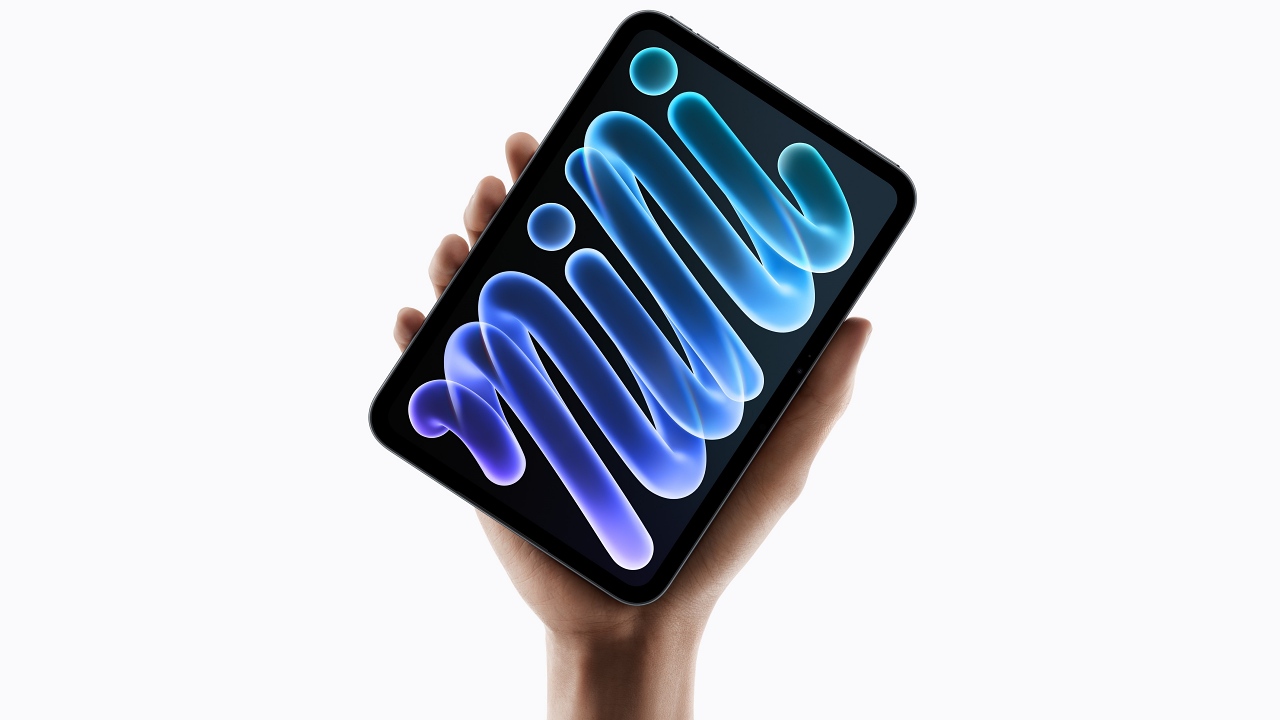
[DigitalToday reporter Jinju Hong] Apple unveiled a new iPad mini featuring an organic light-emitting diode (OLED) display and a next-generation chip. It increased the screen size while reducing thickness and weight. It also added new features such as IP67-rated water and dust resistance and Wi-Fi 7. The starting price rises by $100 from the previous model, and chip performance differs by storage capacity, which are points to check before buying.
On Oct. 26 (local time), IT media outlet 9to5Mac introduced the specifications of the new iPad mini and said hardware has been improved across the board, including the display, performance, durability, wireless connectivity and charging speed.
The most noticeable change is the display. The new model uses an OLED panel instead of the existing liquid-crystal display (LCD) and increases the screen size to 8.5 inches from 8.3 inches in the previous model. It reduces the bezel by 24 percent. OLED can control light at the pixel level, allowing deeper blacks and more vivid colors. Apple explained that it also improved color accuracy based on the P3 wide color gamut.
Screen brightness also improved. Peak brightness is 1,200 nits, about double the previous model. Brightness for standard display and high dynamic range (HDR) content is up to 600 nits, higher than the previous 500 nits. It also supports a minimum brightness of 1 nit to reduce eye strain in dark environments. Models with 256 GB or more can choose a nano-texture display option that reduces reflections. This is the first time the option has been applied to the iPad mini.
The device is thinner and lighter. Thickness falls to 5.4 mm from 6.3 mm, and the width narrows to 132.6 mm from 134.8 mm. The Wi-Fi model's weight drops to 255 grams from 293 grams. The front camera is also moved from the center in portrait orientation to landscape orientation, designed to better suit video calls and landscape use. It comes in two colors: Midnight and Starlight.
The chip handling performance changes to the A20 Pro from the A17 Pro. However, not all models have the same specifications. Except for the 512 GB model, products come with an A20 Pro with some specifications lowered. In those models, the central processing unit (CPU) cores are reduced to 5 from 6, and it uses a standard 16-core neural engine instead of a dual 16-core neural engine. Some performance improvement figures presented by Apple, including unified memory bandwidth gains, need to be viewed separately based on the 512 GB model.
Durability and audio design also change. Apple applies an 'acoustic display' structure instead of the existing stereo speakers. This makes it possible to design a sealed internal space, and the new iPad mini supports IP67-rated water and dust resistance. It strengthens resistance to water and dust while maintaining a small size.
Wireless standards improve to Wi-Fi 7 from Wi-Fi 6E, and Bluetooth to 6 from 5.3. The cellular model uses Apple's C2 chip. Charging is also faster, and with an adapter of 35W or higher, the battery can be charged up to 50 percent in 30 minutes.
The price rises. The new iPad mini starts at $699, $100 higher than the previous model's $599. It is assessed to be closer to a premium product as it generally raises key specifications, including the display, chip, durability and connectivity. Pre-orders begin on Oct. 28, and shipments are expected to start from Nov. 6.
Those considering a purchase need to check not only the price increase but also performance differences by model. The OLED screen, lighter design, and water and dust resistance are changes that can be felt across all models, but some chip specifications and performance figures vary by storage capacity. Whether the new iPad mini can secure competitiveness as a premium product in the small tablet market depends on whether it delivers a user experience that supports the higher price.
 Jinju Hong
hongjj@d-today.co.kr