
[DigitalToday reporter Chi-gyu Hwang] "As AI models find more and more vulnerabilities, there is no single solution that can fix them all at once."
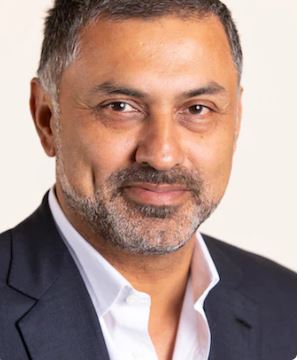
With AI-driven hacking threats on the rise, Palo Alto Networks CEO Nikesh Arora (니케시 아로라) said in a recent post on X (Twitter) that vulnerabilities will keep being found as model performance improves. He said the vulnerabilities that are discovered are scattered across many areas, making it impossible to find and fix them all in one sweep.
Even if all vulnerabilities are found immediately and patches are released, the problem remains. How quickly companies deploy them is a different issue from developing the patches.
He said, "If you apply many patches at once, you cannot know what side effects might occur in the infrastructure," and presented a "hybrid patch" as an alternative.
A hybrid patch centres on pairing a patch that fixes the software directly with a virtual patch that filters attacks first at the network layer.
He said, "To do this properly, you need 'modern frontier defenders' across network traffic, traffic to cloud apps, web application firewalls (WAF), and endpoints." Modern frontier defenders refer to security companies with the infrastructure to create patches quickly and send them to customers immediately.
On mid- to long-term security measures, Arora cautioned against a scenario in which multiple AI agents are deployed at once to stop attacks.
He said token costs and current security structures make it impossible to stop agent-led attacks with a defensive swarm. He stressed, "Attackers stitch together multiple vulnerabilities, slip in while staying hidden, and extract data quickly. This is not a volume fight, but a speed fight."
He stressed that solving the problem starts with fixing the structure of the security operations centre (SOC).
He said, "Logs, threat intelligence and security products must be tied together under a modern security orchestration, automation and response (SOAR) system so you can move quickly. Only then can you deploy agents to handle detection and recovery. Perimeter security equipment must also be modernised and, if I may put it this way, brought together on a single platform to ensure consistency."
Even so, companies are still moving slowly. Arora said, "Because companies do not feel a sense of urgency overall, they cannot make decisions quickly," adding that CIOs and CISOs have mountains of work and some have never faced problems of this scale. "In the end, the cycle will repeat of taking systems down to patch PHP today and something else tomorrow," he said.
He also told frontier AI research and development companies, "The world cannot leave the solution only to you," stressing that "the infrastructure has been built by the tech industry, and the security industry has protected it and provided safety assurances to boards and organisations."
He also made clear that AI security is a new attack surface. He warned that CEOs, including himself, want to adopt AI, but getting the pace wrong or deploying it loosely could become a mistake that puts a company’s fate at stake. He went on to urge companies to check the security of coding harnesses, the execution environments that run AI coding tools, as billions of dollars pour into coding. If an agent can get past guardrails, it could also hide something inside code, he said.
 Chi-gyu Hwang
delight@d-today.co.kr