
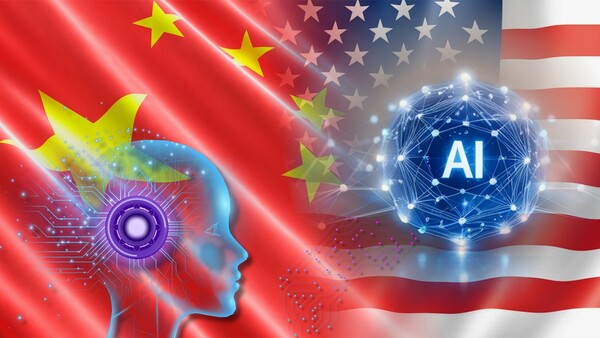
As calls grow in the United States to slow the pace of AI development and strengthen safety regulation, China has already built a phased regulatory framework from recommendation algorithms to generative AI. An analysis says the two countries' race for AI dominance is expanding beyond technological capability to safety management and oversight methods.
Recently, Cleantechnica reported that Madeline Carr (매들린 카), a professor at University College London (UCL), compared U.S. and Chinese approaches to AI regulation in an opinion piece. Dario Amodei (다리오 아모데이), chief executive of Anthropic, has recently urged government intervention, saying, "The pace of AI technological progress is outstripping safety verification." He proposed placing independent external evaluators inside AI companies, establishing common safety standards, and pursuing international cooperation including with China.
China has introduced sector-by-sector regulation earlier than that. Recommendation algorithm rules that took effect in March 2022 imposed obligations to protect user rights and manage algorithms for content recommendation, search and ranking systems.
From January 2023, China implemented management rules for AI-synthesised images and audio and video. Service providers must meet obligations including user identity verification, data protection and labelling of synthetic content.
In August that year, it introduced interim management measures for open generative AI services. Key elements include the legality of training data, protection of personal information and intellectual property rights, and preventing discrimination. Services that affect public opinion formation are also subject to safety assessments and algorithm filing obligations.
Last September, China announced AI Safety Governance Framework 3.0. The guidelines cover risks from AI models to open-source vulnerabilities and control issues for autonomous AI agents. It is not, however, a legally binding regulation.
By contrast, the U.S. federal government has maintained a relatively relaxed regulatory stance that emphasises industrial innovation. Some states, including California, are enforcing separate AI laws, but a comprehensive nationwide regulatory framework has not been put in place.
Carr said, "While AI companies gain the economic benefits of technological development, other countries may bear security incidents and social damage."
The analysis said institutional capacity to manage accountability and risks in the event of incidents is becoming important, as well as the competitiveness of the AI industry.
 Choi Jae-won
ittt_0801@d-today.co.kr