
[Digital Today reporter Jinju Hong] Tesla has expanded its robotaxi operating area in Houston, Texas, by about 10 times. But the number of driverless vehicles actually operating remains at 34, prompting an assessment that a gap has emerged between the pace of service expansion and operating capacity. With drivable roads limited by safety concerns, simply enlarging the zone makes it difficult to secure competitiveness, the report said.
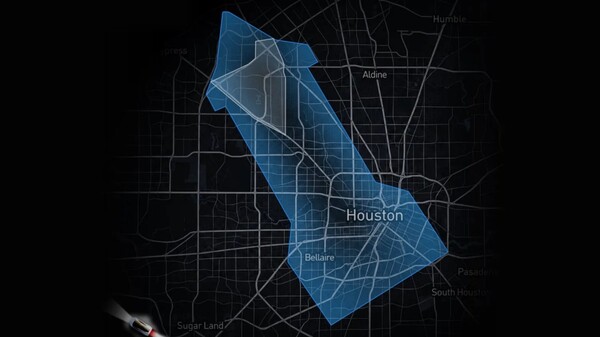
Electric vehicle outlet Electrek reported on Oct. 26 that Tesla expanded its Houston robotaxi service area that day. Tesla's official robotaxi account posted a map on X, formerly Twitter, comparing the existing zone with the expanded area, along with the words, "Houston, we have liftoff." The new zone stretches toward downtown in a shape resembling a rocket.
Tesla started its robotaxi service in Houston in April. At the time, the operating area was only about 25 square miles around Jersey Village, Willowbrook and the FM 1960 area in northwestern Harris County. It was a limited area far from downtown Houston.
The expansion increased the service area to about 254 square miles. The zone is about 10 times larger than before and now includes downtown and Bellaire as it extends to the southeast.
The problem is that the vehicle fleet has not kept pace with the zone's expansion. A robotaxi tracker counted 34 unsupervised Model Y vehicles operating in Houston. That was an increase of only 12 from 22 three months earlier. The Cybercab has not yet been deployed in Houston.
A simple calculation suggests each vehicle covers about 7.5 square miles. Users can hail a car within the expanded zone, but how quickly vehicles are dispatched and whether they can travel reliably to a range of destinations is a separate issue. Even with a larger zone, a shortage of vehicles could lengthen wait times or reduce convenience.
Tesla also drew attention to the unusual shape of its robotaxi zone. The company depicted the Houston map in a rocket shape, but some online responses said it resembled other forms. Tesla also generated attention over the shape of its map when it expanded its Austin pilot service in July 2025. Such visual presentation is not an indicator of actual service capability.
A key task is securing safety and drivable routes. Tesla mentioned safety as a major limiting factor for robotaxi expansion during its earnings conference call last week. The service currently operates mainly on low-speed roads, and complex driving environments remain a burden. Sections requiring additional judgment, such as railroad crossings, were also cited as tasks to address.
It is difficult to judge the actual scale of a robotaxi service by the mapped area alone. That is because the number of operating vehicles, dispatch efficiency, the range of drivable roads and safety in varied traffic conditions all need to support it. Even if a wide zone is secured, users may find the service falls short of expectations if there are not enough vehicles or if many roads are restricted.
In Austin, the fleet has been expanding. Tesla expanded its robotaxi operating area to the Austin metropolitan area early this year, but the fleet at the time was about 20 vehicles. The robotaxi tracker counted 397 driverless vehicles now operating in Austin and said more than half are Cybercabs. If vehicle deployments increase in Houston in the future, the effect of the zone expansion could be different.
Compared with rival Waymo, Tesla's approach to expansion in Houston also differs. Waymo has operated a fully driverless ride service in Houston since February, and expanded the local service area to about 50 square miles in May ahead of the FIFA World Cup. Tesla's operating zone is larger by area, but the two companies' service scale and operating capacity need to be assessed together with vehicle numbers and actual operating conditions.
The expansion is meaningful in that Tesla has broadened its service reach into downtown Houston. But unless the limited fleet size and safety constraints are resolved, it will be difficult to prove competitiveness through a larger zone alone. The report said future results will hinge on increasing vehicle numbers, improving dispatch efficiency and achieving stable driving performance in complex road environments for Tesla's robotaxi business.
Houston, we have liftoff Bigger service area now live https://t.co/ps8fZmWpuP
 Jinju Hong
hongjj@d-today.co.kr