
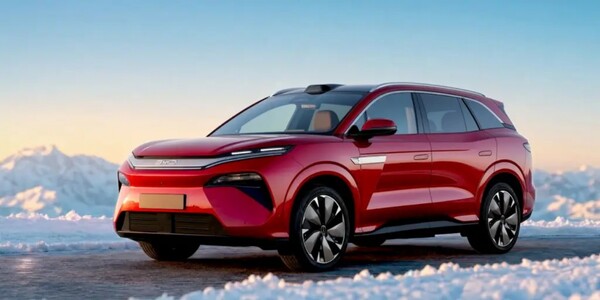
[DigitalToday reporter Jinju Hong] Chinese automakers have for the first time outsold Japanese rivals in Europe on a quarterly basis.
According to major foreign media outlets including Cryptopolitan on Oct. 26, Chinese brands accounted for 12.7 percent of new-car registrations in Europe in September, surpassing Japanese brands at 11.9 percent.
The figures reflect new cars registered by European consumers, not factory output. That makes them a meaningful gauge of which brands are actually selling in Europe. Hybrids were at the center of the rise. The overall European market is still led by local automakers such as Volkswagen and Renault.
Chinese brands are expanding quickly. Five years ago they accounted for less than 1 percent of car sales in Europe, but they have now risen to the point of competing head-on with Japanese automakers that have long held the market. Toyota has sold cars in Europe since 1963, and Nissan has produced vehicles at its Sunderland plant in Britain since 1986.
Britain has emerged as a particularly important market for Chinese automakers. Chery's Jaecoo 7 sports utility vehicle ranked among Britain's best-selling models in March and September. Chinese automakers also put forward new cars tailored to European consumers at the recent Paris Motor Show. Chery, BYD and Geely's Zeekr unveiled Europe-only models, and BYD showcased the Dolphin G DM-i, a low-priced plug-in hybrid.
Chinese automakers' overseas push is also tied to weakness at home. As Chinese consumers shift to domestic brands from Volkswagen and BMW, foreign automakers' foothold in China is weakening. Local automakers are launching new models on a faster cycle and setting lower prices. Automakers are therefore seeking a breakthrough in overseas markets.
The European Union is seeking to rein in the expansion. Brussels believes Chinese automakers benefit from government subsidies and has already introduced additional tariffs on China-made battery electric vehicles. It also reached a tentative deal this month to cap imports of China-made hybrids at 350,000 vehicles a year. Manufacturers, however, are increasing hybrid shipments in anticipation of possible additional regulations.
Europe is also considering incentives for local production alongside import restrictions. A representative measure would link tax benefits for company cars to production within Europe. The impact may not be small in Germany, where demand for corporate and fleet vehicles is high.
Changes in Chinese government policy are another variable. Beijing said on Oct. 12 it would cut the export value-added tax rebate rate for new-energy vehicles to 9 percent from 13 percent from April 1, 2027. JPMorgan warned in a memo dated Oct. 21 that profitability could deteriorate faster than expected if the rebate cut overlaps with a revival of a battery consumption tax.
BYD said existing plants in Southeast Asia could limit the impact of reduced rebates on regional sales. It also said that if shocks to global oil prices boost demand for electric vehicles, overseas production expansion would continue. It said it has not yet decided whether to raise overseas selling prices to offset the additional tax burden. It said it is considering an increasingly intense competitive environment.
Chinese automakers have already begun expanding local production in Europe. Chery is preparing for production in Barcelona, and BYD is nearing completion of a new plant in Hungary. Zhejiang Leapmotor has started producing its B10 SUV at a Stellantis joint venture plant in Zaragoza, Spain.
Morgan Stanley estimated in an Oct. 13 report that BYD's electric-vehicle production capacity outside mainland China has reached about 1 million vehicles, with Europe accounting for only 30 percent. As BYD pursues such overseas expansion, it is also facing financial pressure from weak domestic demand. Net profit in the first half fell more than 20 percent from a year earlier to 12.3 billion yuan.
An expansion in hybrid sales, slowing demand in China, the rollout of Europe-tailored models and a shift to local production have together driven Chinese automakers to overtake Japanese brands in Europe for the first time. How much Europe's import limits and China's tax changes alter this trend will remain key variables.
 Jinju Hong
hongjj@d-today.co.kr