
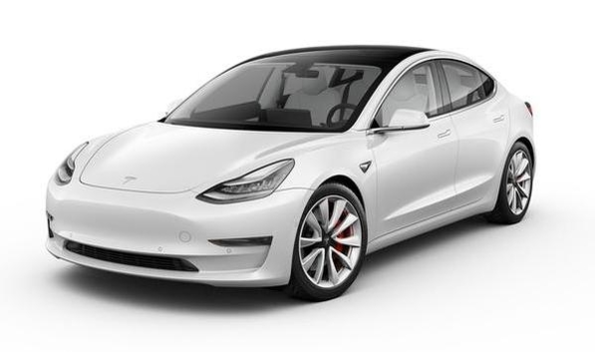
A Tesla Model 3 kept 92.8 percent of its high-voltage battery performance in a check conducted in its fifth year after delivery.
On Oct. 25 local time, IT outlet IT Media reported that the vehicle, delivered in September 2021, was found to be in good condition on key items in a check conducted ahead of its second regular vehicle inspection.
The most notable result was the battery condition. The high-voltage battery maintained 92.8 percent performance compared with when it was delivered, and the degradation rate was 7.2 percent. The owner said they had heard that "after 5 years battery degradation becomes severe and you cannot use it," and said the check confirmed that at least this did not apply to their vehicle.
Wear on driving parts was also limited. Remaining brake pad thickness was 9 mm on the front wheels and 8.5 mm on the rear wheels. The outlet attributed the low wear to the car's use of regenerative braking to slow and stop while driving. The owner said, "I drove safely for 5 years without a real breakdown," and said one-pedal driving helps reduce maintenance costs.
The owner also gave a positive assessment of vehicle reliability. The owner said they expected some issues because it was an imported car, but said, "There are no problems to the point it is anticlimactic." The owner added they had heard vehicles produced at the Shanghai plant are more reliable than those produced at U.S. plants, and said they felt that in actual driving as well.
The check also replaced consumables such as wiper blades, the air-conditioner filter and brake oil. Cleaning of the evaporator and heat pump was also carried out. The outlet said the work was not essential maintenance but a measure to prevent hygiene issues from long-term use and to prevent failures in heating and cooling systems.
The outlet also said that if dust, mud and insects build up in the heat pump and clog it, it could lead to compressor failure, which was behind the decision to clean it. The owner said they judged the five-year point after delivery could serve as a benchmark for maintenance.
The case shows the vehicle remained in good condition on battery performance and major inspection items even at the five-year point after delivery. The outlet said it is difficult to generalise battery life or maintenance costs for all electric vehicles based only on the inspection result of an individual vehicle. It said that when assessing EV maintenance costs, it is necessary to consider not only battery degradation but also the cost of managing consumables such as brakes, air-conditioning equipment maintenance costs and cost differences depending on the vehicle inspection method.
 Seung-a Yoo
ysah@d-today.co.kr