
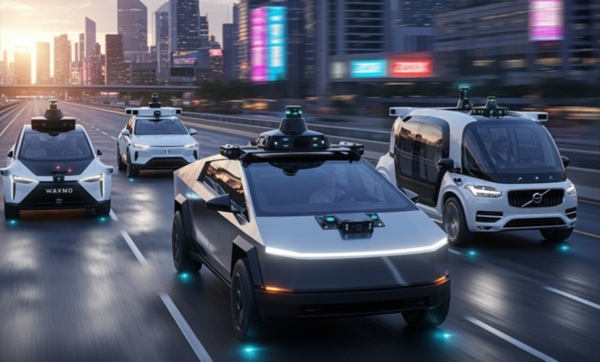
Tesla's robotaxi autonomous driving mileage may have moved ahead of Waymo's in Austin, Texas, in the United States. An analysis said that if the recent 20 percent weekly growth rate holds, Tesla could overtake Waymo on a nationwide U.S. basis in about 11 weeks.
On Oct. 24, electric vehicle outlet CleanTechnica forecast that if the trend continues, Tesla could exceed half of the combined weekly paid passenger miles of Uber and Lyft across three major Texas cities around mid-February next year.
The analysis said Tesla's autonomous driving mileage rose to about 1.7 million miles from 250,000 miles in the previous quarter. A figure later released by the company reached 3.3 million miles. Based on that, recent weekly autonomous mileage was estimated at about 558,000 miles. Applying a 20 percent weekly compound growth rate to that would put it above Waymo's weekly mileage of around 4 million miles in about 11 weeks.
In Austin, Tesla's weekly autonomous mileage was tallied at 437,800 miles. Waymo posted about 406,000 miles a week as of the second quarter of 2026. The two figures cover different measurement periods, making it hard to treat them as a direct comparison at the current point in time.
Waymo's cumulative passenger-only autonomous mileage stood at 271.3 million miles as of the end of June 2026. The second-quarter increase was about 50.7 million miles, up about 1.6 percent from 49.9 million miles in the first quarter. By region, Phoenix declined for a second straight quarter, while Austin's quarterly growth rate fell to about 4 percent in the second quarter of 2026 from more than 100 percent in early 2025. Los Angeles and San Francisco recorded growth rates of about 9 percent and 13 percent, respectively.
The market Tesla is targeting is not limited to ride-hailing services. The analysis said that if Tesla offers the service at about half of Uber fares, it could also draw in some demand for personal vehicle use. Weekly paid passenger miles for Uber and Lyft combined in Austin, Dallas-Fort Worth and Houston were estimated at 10 million to 14 million miles. It forecast that the potential market could grow further if some personal vehicle travel shifts to robotaxis.
The analysis said continued growth would require adding vehicles and expanding service areas. Tesla's Dallas operating area is about 81 square miles, and cumulative autonomous mileage has surpassed 600,000 miles. Houston covers about 25 square miles, with cumulative mileage of about 226,000 miles. Expanded charging infrastructure and maintenance capacity, regulatory approvals and keeping vehicle utilization rates up are also variables that will influence the pace of growth.
Safety validation is also a key task. The analysis said that as autonomous driving data accumulates, there is more room to compare the safety of Tesla and Waymo with human drivers. It said safety cannot be concluded from mileage alone and that accident rates and operating conditions should also be compared. It cited whether Tesla's 20 percent weekly growth rate continues and whether service areas in Dallas and Houston expand quickly as key variables in future market competition.
 Seung-a Yoo
ysah@d-today.co.kr