
Competition in wearable devices that integrate artificial intelligence into daily life is spreading to necklace-style pendants, rings, wrist-worn devices and portable terminals. As products emerge ranging from productivity-focused tools that record and summarise meetings and calls to AI companions that respond to users’ emotions, the market’s direction is also diversifying.
TechCrunch reported on Oct. 25 that AI wearables recently launched or in development are emphasising different functions such as conversation logs, schedule management, personalised advice and emotional support. OpenAI is also known to be preparing a small AI companion device, further increasing interest in the market.
Among productivity-focused products, Bee, a wearable startup acquired by Amazon in July 2025, is drawing attention. Its existing $49.99 pendant records nearby conversations and learns the user’s work and preferences to provide notes and alerts. It also includes a mute button for privacy. The related app runs on a $19-a-month subscription.
Amazon also introduced Bee Frontier and Bee Eclipse earlier this month. Bee Frontier costs $74.99 and can be worn on the wrist or attached to clothing, while Bee Eclipse is a $99.99 card-style product that attaches magnetically to the back of a smartphone. Both devices carry over key functions of the existing product and also support integration with Alexa.
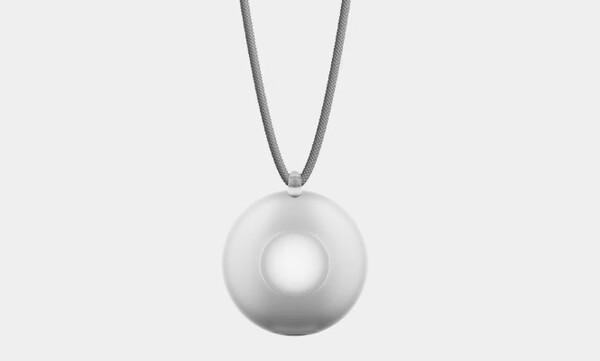
A leading product centred on emotional interaction is Friend. The $129 white pendant positions itself as an AI companion that recognises the user’s tone and mood and sends messages first when needed, such as offering words of encouragement ahead of a job interview. Concerns have also been raised about possible invasion of privacy over its function of listening to nearby conversations.
Friend recently added voice functions and a built-in speaker through a "Friend 2.0" update. It improved the product to allow users to talk directly with the device and to strengthen the AI’s personality.
It is also targeting demand for using conversation records for work. Limitless is a $99 pendant that records meetings and calls and provides searchable conversation logs and summaries. The basic app supports 10 hours a month of transcription and summarisation, while the $29-a-month plan offers unlimited use.
Plaud's NotePin costs $159 and targets users for whom recording matters, including lawyers, journalists and students. It can be attached to clothing with a magnet or worn on the wrist, and it transcribes and summarises recordings to reduce the burden of manual note-taking. Basic transcription time is 300 minutes a month, and the $8.33-a-month pro plan increases it to 1,200 minutes. The company is also taking pre-orders for the $179 ultra-thin "Plaud Note Pro" device.
Products have also emerged that aim to use AI for personal records and self-understanding. Nirva, founded by former Meta Reality Labs employees, aims to organise everyday experiences into a personal journal and provide insights into emotions, habits and communication styles through a pendant- or bracelet-style device. It is priced at $249 and plans to start taking orders in November and push for initial deliveries by year-end.
Omi is priced at $89 and offers question-and-answer, conversation summaries, to-do list creation and schedule coordination. Along with wearing it like a necklace, it also suggests attaching it to the side of the head with medical tape to detect moments when the user speaks to themselves.
Meta unveiled a pocket-sized AI wearable last September. The device, which has not yet shipped, uses a small display and a keychain-style design and is designed for interaction with the AI assistant Muse through a digital avatar called "Joli". It uses voice commands to request tasks.
The Rabbit R1, a portable AI device, costs $199 and offers a touchscreen and a rotating camera. It struggled with software issues at its initial launch, but expanded its functions through updates. It recently added a "Creations" feature that lets users make tools or games themselves. Rather than replacing a smartphone, it aims to assist with booking flights, ordering food and controlling apps.
Ring-style products have also joined the competition. Sandbar's Stream Ring keeps its microphone off by default and works only when the user presses the top touch panel. A long press allows voice memos or interaction with an AI assistant in a smartphone app, and it can also control music playback. It is priced at $299, with silver and gold versions set to be released.
The AI wearable market has yet to converge on a specific form or use. Some products emphasise conversation logs and work automation, while others focus on emotional interaction and self-reflection. Price competitiveness, privacy safeguards and the level of integration with smartphones are cited as key variables that will determine market leadership.
 Jinju Hong
hongjj@d-today.co.kr