
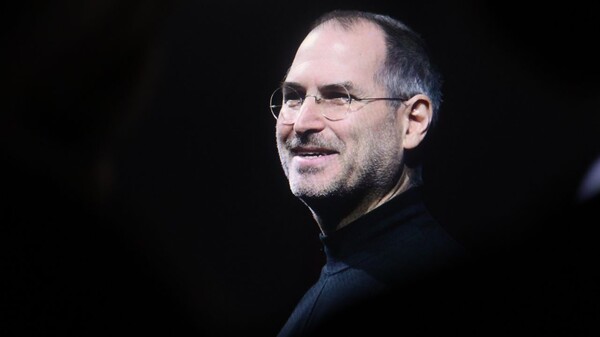
[DigitalToday intern reporter Seungah Yoo] PayPal co-founder and technology investor Peter Thiel criticised Apple, saying it has failed to deliver new innovation since Steve Jobs died.
On Oct. 24, Business Insider reported that Thiel said in a September interview on the 'Builders Podcast' with author Walter Isaacson (Walter Isaacson), "From my perspective, there was nothing new after Steve Jobs." The interview was released on Oct. 22.
Thiel said the iPhone was a major invention, but that Apple's subsequent growth focused on expanding existing products and building its brand rather than innovation. "The mobile phone was a huge invention, but after that there was not much to do," he said. "For about the next 15 years, it was about scaling up, building the brand and expanding the business."
Apple has faced criticism that it has failed to show new innovation beyond the iPhone and tablets. As competition in artificial intelligence has intensified, there has also been criticism that the voice assistant Siri lags behind ChatGPT and Anthropic's AI products.
Apple unveiled the first iPhone in San Francisco in 2007, and this week introduced a new iPhone model featuring a foldable design. Meanwhile, the MacBook has become a laptop used widely by everyone from AI industry workers to general consumers, and the iPhone is also widely used worldwide. AirPods, launched in 2016, also succeeded in becoming mainstream on the back of a distinctive design.
Thiel did not deny Apple's business operations and profitability. He described Apple as a "pure, well-run value stock," but said the company's vision weakened after Jobs died. "In some respects, Elon Musk or Steve Jobs (Steve Jobs) is much better for society than Tim Cook (Tim Cook)," he said.
Thiel also argued in 2017, in an interview with The New York Times' Maureen Dowd (Maureen Dowd), that Apple's era was over. Apple's share price has risen steadily since then. Separately from criticism about innovation, attention has also focused on the fact that Apple has maintained a strong product ecosystem and brand, and stable business operations.
The remarks have reignited debate about whether Apple can lead a new technological transition after the iPhone. With AI competition intensifying, attention is focused on whether Apple can present new growth drivers beyond its existing hardware competitiveness.
 Seungah Yoo
ysah@d-today.co.kr