
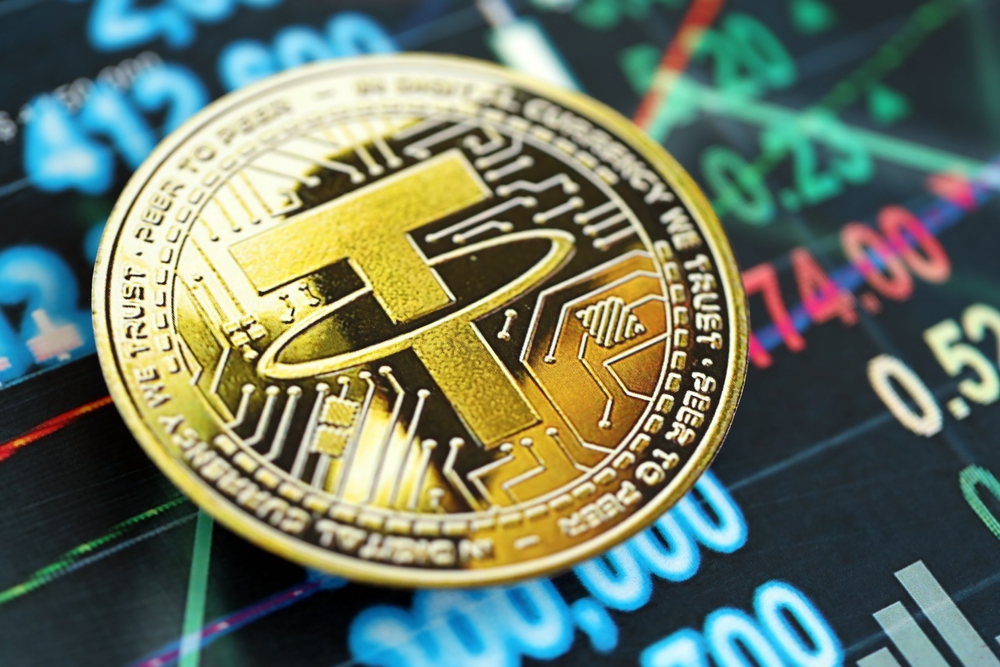
[DigitalToday reporter Sangyeop Oh] As the global stablecoin market grows to 400 trillion won, a dollar-centric structure is hardening quickly. In South Korea, critics say the country needs not only rules to allow issuance of won stablecoins but also places to use them for actual payments and remittances, along with sufficient liquidity.
According to on-chain data analytics platform DefiLlama and others, global stablecoin market capitalisation stood at about $303.1 billion, or about 407.5 trillion won, as of the 15th.
Dollar-based stablecoins Tether (USDT) and USD Coin (USDC) account for about 85 percent of the total market. Dollar stablecoins are expanding beyond digital asset trading into payments and cross-border remittances, strengthening their market dominance.
The United States has also built an institutional foundation by preparing the GENIUS Act, which includes a regulatory framework covering stablecoin issuance, reserve assets and redemption.
In South Korea, debate continues over who can issue won stablecoins, how reserve assets should be managed and how redemption should work, and that has prevented the Digital Asset Basic Act from gaining momentum.
The problem is that the longer institutionalisation is delayed, the more entrenched the dollar-centred market structure could become. Stablecoins become easier to trade and exchange as more users join, and liquidity draws in more users, creating a strong first-mover advantage.
That means even if won stablecoins enter the regulated system, they may struggle to compete with dollar stablecoins without enough users, merchants and transaction infrastructure.
In the global market, there is also an assessment that securing real use cases and liquidity matters more than issuance itself for non-dollar stablecoins to take hold.
Kyungseok Oh (오경석), chief executive of Dunamu, recently stressed at Korea Blockchain Week 2026 (KBW 2026) that won stablecoins must secure competitiveness in cost and speed to compete with dollar-based payment methods.
He also cited individual investor liquidity in South Korea's digital asset market as a strength and expressed the view that exchanges could play a role in expanding distribution and usage rather than issuing directly.
Abroad, efforts are also under way to connect stablecoins denominated in domestic currencies to actual payment networks.
Global digital payments infrastructure company StraitsX is using its Singapore dollar-based stablecoin XSGD for local QR payments. It is an example of trying to expand stablecoin use by linking existing payments infrastructure with on-chain finance.
Stablecoins in domestic currencies are also cited as competitive because they can reduce foreign-exchange risk.
Jan Oliver Sell (얀 올리버 셀), chief executive of European banking consortium Qivalis, pointed out that even if companies can move funds 24 hours a day through on-chain finance, foreign-exchange risk arises when the base currency differs from the actual payment currency. Domestic currency-based stablecoins are an area that can complement existing dollar stablecoins.
Still, even if use cases emerge, it is not easy to expand the market without securing liquidity.
Alex Cutler (알렉스 커틀러), chief executive of Dromos Labs, explained that for new local-currency stablecoins, a lack of users can prevent liquidity from forming, and limited liquidity can in turn prevent them from attracting users.
Won stablecoins face the same challenge. South Korea already has convenient payment infrastructure such as real-time bank transfers and simple payment services, so they must offer a clear benefit over existing methods to secure users.
Overseas remittances, international payments and on-chain financial transactions, where the existing financial system is costly or time-consuming, are cited as key use cases. That would require smooth exchange between won, foreign currencies and stablecoins, sufficient liquidity, and stable redemption and payment infrastructure.
The Financial Services Commission also presented a plan in September in its policy direction on token securities to begin full preparations for introducing on-chain payments after stablecoins are legislated.
Ultimately, there is an assessment that competitiveness for won stablecoins is difficult to secure by allowing issuance alone. Rules governing issuance and redemption, a distribution structure involving banks, payment providers and digital asset exchanges, and services that actual users can choose must be in place at the same time.
In the financial investment industry, voices are emerging that South Korea should pursue institutional discussions and build a real-use ecosystem in parallel as the global stablecoin market is already expanding rapidly around the dollar.
The later won stablecoins enter the market, the more dependence on dollar stablecoins could rise in global payments and on-chain finance markets, prompting calls to clarify an institutional foundation through the Digital Asset Basic Act so businesses can prepare services.
 Sangyeop Oh
yub@d-today.co.kr