
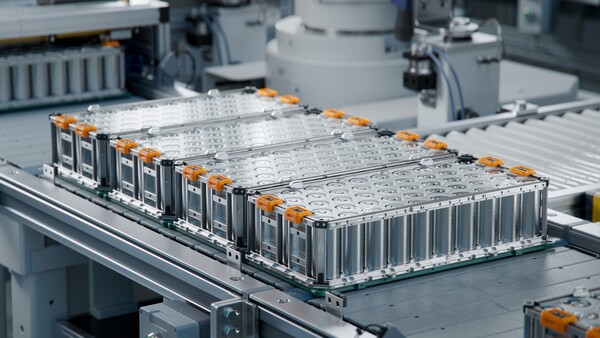
General Motors and LG Energy Solution are pushing to locally produce in the United States a next-generation battery with higher energy density than existing low-cost batteries. The strategy targets both price competitiveness and driving range. If carried out, it is expected to become the world’s first commercial production of lithium manganese-rich (LMR) prismatic batteries.
Cleantechnica reported on Oct. 19 local time that their joint venture Ultium Cells plans to retrofit its Spring Hill plant in Tennessee to produce next-generation LMR prismatic battery cells.
LMR batteries are designed to balance cost and energy density by increasing the share of relatively inexpensive manganese in the cathode material. GM set a goal of boosting energy density by 33 percent at a cost similar to lithium iron phosphate (LFP) batteries.
Higher energy density allows more power to be stored in the same weight or space, which is favorable for extending electric-vehicle driving range.
GM plans to keep high-nickel batteries for vehicles that prioritize long-distance driving, while using LMR as a new option that balances price and performance. It plans to apply LMR to future electric pickup trucks and large sport-utility vehicles (SUVs).
The Spring Hill plant is already producing pouch-type battery cells. It also began producing LFP battery cells for energy storage systems (ESS) from June this year. The plan is to add LMR prismatic cells to diversify battery chemistries and formats.
The plant retrofit is scheduled to begin late this year and be completed in 2028. The expansion is expected to create about 500 new jobs. At the time of the announcement, the plant workforce stood at about 1,200.
Ultium Cells projected the total investment, including switching to LFP production and building LMR facilities, will reach $1.0 billion by 2030.
The start date for mass production of LMR and the timing for its application to finished vehicles have not yet been decided. A key issue is whether GM and LG Energy Solution can deliver the targeted performance and costs in commercial production.
 Jae-won Choi
ittt_0801@d-today.co.kr