
Georges Elhedery (조르주 엘헤데리), chief executive of HSBC, called for a selective approach to investing in data centres, saying not all of them are promising even as AI spreads.
CNBC reported on Oct. 20 that Elhedery described AI as a target for large-scale investment. He said investment in the infrastructure that supports it should be assessed for contract structure and profitability.
Elhedery defined AI as a core technology that can redesign banks as a whole. "AI is a major driver that makes us reimagine every business and activity," he said. "It will give employees more capabilities by improving productivity." He added that HSBC is moving ahead in earnest with adopting AI, and that AI will help redesign the bank.
He cautioned against blanket optimism over data-centre investment. "You have to be selective," Elhedery said, adding that investors need to look at the quality of lease contracts and contract pricing together. "Some assets are not strongly backed, and some assets may be more difficult," he said.
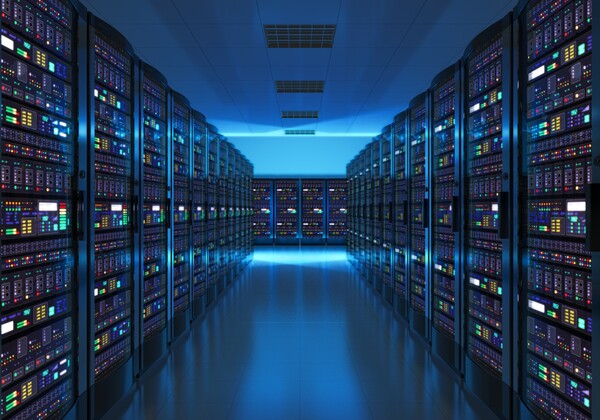
The remarks came as the data-centre market expands rapidly on the back of AI and cloud demand. Data-centre campuses are facilities that house servers that run AI and cloud computing, and an investment boom worth billions of dollars has continued in recent years. McKinsey estimated that global data-centre spending could reach $7 trillion by 2030.
Market focus is shifting from expanding facilities themselves to funding structures. Big tech companies are increasing private credit and corporate bond issuance to raise money for data-centre development. In this trend, expanding AI-related borrowing has emerged as a source of tension in financial markets. That is because companies are piling on massive debt and competing to expand AI and data centres as the cost of capital rises.
Mohamed El-Erian (모하메드 엘에리언), Allianz's chief economic adviser and former PIMCO CEO, said earlier this month at an event in London that a funding race between governments and AI companies is increasing pressure on bond markets. He said governments are continuing refinancing issuance at high interest-rate levels, and hyperscalers raised $200 billion in bond funding last year and could increase it to as much as $1 trillion this year. He also said these companies are less sensitive to yields and credit spreads because they are betting on something that is truly transformative.
Such funding demand is also intertwined with the macro environment. In 2026, government bond yields in major countries rose to levels near multi-decade highs amid large fiscal deficits and accumulated debt, persistent inflation worries and expectations of more hawkish central banks. JP Morgan estimated earlier this year that AI-related debt issuance could reach $4.1 trillion by the end of the decade as data centres and other AI-adjacent companies expand their facilities.
HSBC's stance is not unrelated to this structure. Based on S&P Global data, HSBC was tallied as one of the world's top seven banks by holding about $3 trillion in assets last year and as Europe's biggest lender. London-headquartered HSBC is both a financier and an operator of data centres. In its 2025 annual report, HSBC set out a plan to become a leading bank in a fast-growing transition ecosystem based on its client base, including in data centres and AI.
Ultimately, the HSBC chief's comments are closer to a message that the quality of infrastructure assets riding AI growth should be screened, rather than the growth potential of AI itself. Expanding AI demand does not automatically guarantee the investment appeal of the data-centre sector as a whole, and the market is expected to increasingly examine whether individual assets are differentiated, focusing on contract stability and financing costs.
 Jinju Hong
hongjj@d-today.co.kr