
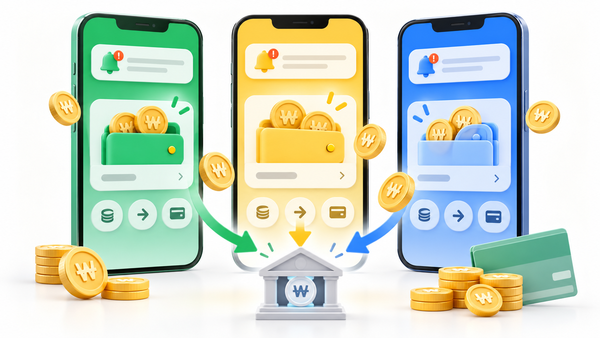
Three major simple payment platforms, including Naver Pay, Kakao Pay and Toss, are stepping up notifications on prepaid top-up balances that have not been used for a long period. The platforms hold a combined 25.5 billion won in dormant balances, and differences have emerged in who is notified, validity periods and refund guidance methods. Kakao Pay notifies users with balances of 1 won or more, while Naver Pay and Toss use a threshold of 1,000 won or more.
The financial sector said on Wednesday that the Financial Services Commission and the Financial Supervisory Service, together with Naver Financial, Kakao Pay and Viva Republica, have prepared measures to notify users of long-term unused prepaid top-up balances and promote refunds.
As of the end of August this year, the three companies held a total of 25.5 billion won in long-term unused prepaid balances. The number of users subject to notification reached 1.76 million, including overlaps.
From Oct. 19, the three companies will regularly notify long-term inactive users that they hold prepaid top-up balances and provide procedures so users can conveniently obtain refunds.
A notable difference is who receives notifications. Kakao Pay notifies at least once a year users who have not used the service for at least 1 year since their last use and have balances of 1 won or more. Naver Pay and Toss notify users who have no usage history in the past 2 years and have balances of 1,000 won or more.
Notification channels also differ. Naver Pay links balance inquiries and cash refund applications through Naver TalkTalk. Toss uses app push notifications so users can immediately move balances to accounts in their own names.
Kakao Pay added the word "refund" to the existing "Send to my account" button in its KakaoTalk alert messages to make it easier for users to recognise they can get their top-up balances back. Users can receive an immediate refund of the amount they want after moving from the alert message to the account transfer screen.
Differences also appear in validity period policies for prepaid top-up balances. Toss Money sets no separate validity period, so balances do not expire even if unused for a long time.
Kakao Pay applies a 10-year validity period based on the last top-up or use date. In April this year, it implemented a policy to automatically extend the validity period by 10 years so users can continue using their balances without a separate application. Naver Pay also has a 10-year validity period.
The measure aims to strengthen guidance so users can check top-up balances they had forgotten about and receive cash refunds when needed.
Financial authorities plan to use the results of the improvements to encourage voluntary participation by other electronic financial businesses.
 Ji-young Lee
ljy@d-today.co.kr
Ji-young Lee
ljy@d-today.co.kr