
[DigitalToday reporter Jinju Hong (홍진주)] Apple, Amazon and Microsoft (MS) have rolled out consumer devices featuring generative artificial intelligence (AI) ahead of the year-end shopping season. They are putting AI assistants front and centre across products from laptops to tablets and smart home hubs to create new hardware demand. It is unclear whether AI will be a key driver of purchases as consumers face heavier spending burdens amid high inflation and rising component prices.
On Oct. 14 local time, CNBC reported that the three companies unveiled new products with enhanced AI features over the past week as they moved to target the home hardware market.
The core of the competition is less about the AI technology itself than about how quickly it can be embedded in consumers' daily lives. Nearly 4 years after the release of ChatGPT, Big Tech companies are now seeking to expand how people use AI through personal computers, tablets and in-home smart devices.
Jitesh Ubrani at market research firm IDC analysed that companies are introducing AI to consumers and laying the groundwork for more aggressive device launches later. He said it is a phase of distributing related devices into consumers' hands and homes, teaching them how to use them and collecting feedback. He predicted the new products would not immediately lead to mass sales.
MS last week unveiled an Nvidia-based Windows 11 laptop. It starts at $2,599. It stressed that powerful AI functions can run without relying on the cloud, centred on Nvidia's RTX Spark AI chip. It features the ability to perform AI tasks on the device itself rather than sending data to external servers for processing.
Amazon launched the Alexa Tablet, its first hardware branded around the AI assistant name. The largest model, the Alexa Tablet 12 Pro, is priced at $550, sharply higher than the existing Fire HD10 at $155. It is moving away from its previous strategy built around low-cost products, targeting consumers with 3 new models featuring a premium design and enhanced AI functions.
Users can ask the AI assistant Alexa questions via voice or an 'Ask Alexa' button and receive personalised recommendations. It also offers smart home device control and adds 'Onscreen Intelligence', which recognises what is displayed on the screen and performs related tasks. The strategy is to expand use beyond a tablet for consuming content into a device for interacting with AI.
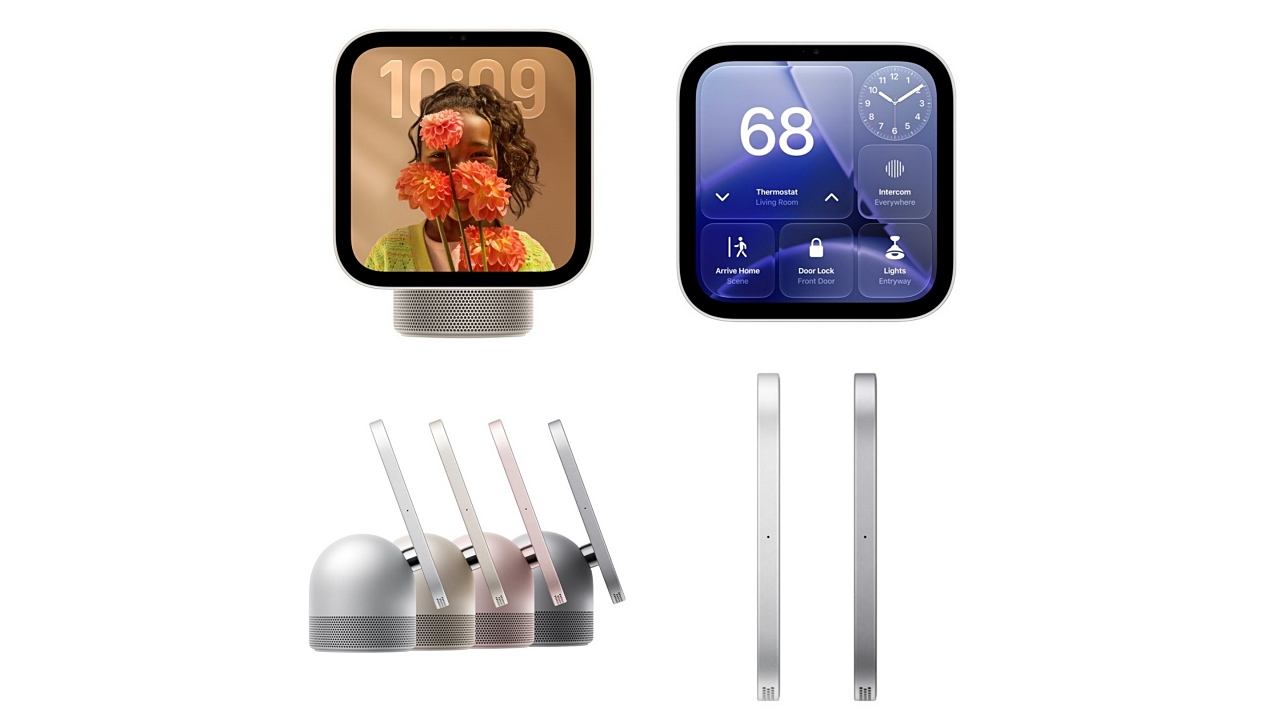
Apple on Oct. 14 unveiled the Siri-based smart home hub 'HomeView'. It costs $299 and has a 7-inch screen that can also be mounted on a wall. It features customised settings for each family member through facial recognition.
HomeView uses Apple Intelligence to proactively show text messages, schedules and photos, and is designed to answer a range of questions through Siri. It is an attempt to provide a user experience closer to conversational AI than existing voice assistants. Apple used an A18 chip to support device performance.
The three companies' products also differ in price and strategy. MS is targeting professional demand with an expensive laptop that emphasises high-performance AI computing, while Amazon has moved into a higher-priced lineup than its existing low-cost tablets. Apple appears to be seeking to extend its devices and services ecosystem into the home through a smart home hub.
Mohit Agrawal at Counterpoint Research assessed that Apple is placing more weight on expanding its ecosystem than on immediate high hardware margins. He analysed that it set HomeView's price at a relatively reasonable level even as component supply is not smooth.
Some also point out that even if consumers find AI features attractive, it remains unclear whether they will buy new devices for that reason. Dipanjan Chatterjee at Forrester said interest in what AI can do is separate from the willingness to buy hardware.
Spending conditions are also a variable. U.S. consumer sentiment is being assessed as the weakest in 12 years due to high inflation. Concerns over AI safety and privacy protection, as well as the burden of learning new technology, are also factors hindering consumer adoption.
As prices rise for key components such as memory and storage, demand for AI servers is absorbing production capacity, increasing the burden of hardware prices. Some forecasts suggest smartphone and laptop shipments could fall this year. If consumers delay replacing existing devices, the launch of new AI products may not lead to as much of a sales increase as expected.
Still, year-end consumption prospects are not broadly shrinking. In an August survey by McKinsey, nearly half of U.S. consumers said they plan to spend a similar amount or more at year-end than last year. Bain projected last month that U.S. year-end retail sales will top $1 trillion for the first time.
But rising sales do not necessarily mean increasing volumes. Bain warned that more than half of nominal retail sales growth could come from price increases driven by inflation. It also raised the possibility that sales of some electronics and home appliances could stagnate. Bain's Aaron Cheris analysed that consumers could delay replacement cycles as they become more sensitive about spending.
Big Tech companies are also focusing on securing subscription revenue, not just hardware sales. Amazon's new Alexa requires either a $19.99 monthly subscription or Prime membership. Apple also requires a higher-tier iCloud subscription plan to use its security video recording function. They are seeking to build a structure that generates recurring revenue even after selling devices.
Over the long term, another point to watch is how much competitiveness comes from running AI on the device itself. Handling AI tasks without cloud connections can reduce latency and increase control over data, but it has not yet been verified whether consumers will see enough value to buy more expensive devices for that.
Carolina Milanesi at Creative Strategies said it has not yet been proven that consumers will pay extra for improved on-device processing performance. By contrast, Jeff Morgan at OLLAMA said there is demand for computers controlled directly by users, stressing the appeal of running AI directly on one's own device instead of borrowing it from outside.
Apple is also set to launch the $1,999 foldable iPhone 'iPhone Duo' next week. It has an interface that displays 2 apps side by side and also shows conversations with Siri, presenting it as a device suited to using AI agents.
Ultimately, the year-end shopping season is expected to be a test of whether AI can create real replacement demand in the consumer hardware market. Adding AI features to products alone is not enough. Whether consumers feel enough convenience and utility to accept higher prices is likely to shape the next round of competition among Apple, Amazon and MS.
 Jinju Hong
hongjj@d-today.co.kr
Jinju Hong
hongjj@d-today.co.kr