
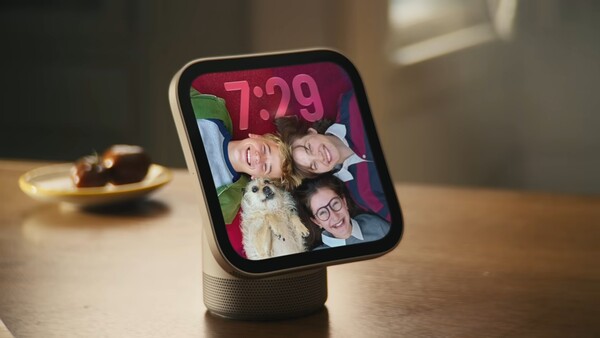
[DigitalToday reporter Choi Jae-won] Apple is moving to target the market with HomeView, a display-equipped smart home device. Analysts say it focused on making a shared device that any family member can use easily, rather than adding new functions not found on existing iPhones or iPads.
On Oct. 14 (local time), IT outlet The Verge said HomeView’s biggest feature is that it can be used at any time from a fixed location in the home. Users can adjust lighting and temperature and check family schedules without having to find a smartphone or unlock a tablet.
HomeView has a 7-inch Liquid Retina display and sells for $299 in the United States, or about 402,700 won. It comes in tabletop and wall-mounted versions and is used while connected to a constant power supply without a separate battery.
A differentiator from the iPad is that it works as a hub for Apple Home. It recognises up to 6 family members by face to provide a tailored screen for each, and supports FaceTime video calls, music playback and security camera monitoring.
The core function is Siri AI. It controls smart home devices through natural-language commands and provides tailored information using a user’s schedule and messages. Functions that use personal context require a compatible iPhone or iPad.
Kaiann Drance (카이앤 드랜스), Apple’s vice president of Home product marketing, explained, "As Siri AI and personal context features combine with a home device, experiences that we could not provide before have become possible."
Siri AI is designed to reduce unnecessary follow-up questions and quickly carry out tasks a user requests. The smart home control function itself, however, is not much different from the existing Apple Home app. The focus is on improving accessibility and convenience rather than adding new features.
HomeView will launch first in the United States, Britain, Canada, Australia, India, New Zealand, Singapore and South Africa, while its schedule for South Korea has not been decided. With Apple’s smart home strategy prioritising everyday user experience over technological innovation, the key is how much it will be used in real households.
 Choi Jae-won
ittt_0801@d-today.co.kr
Choi Jae-won
ittt_0801@d-today.co.kr