
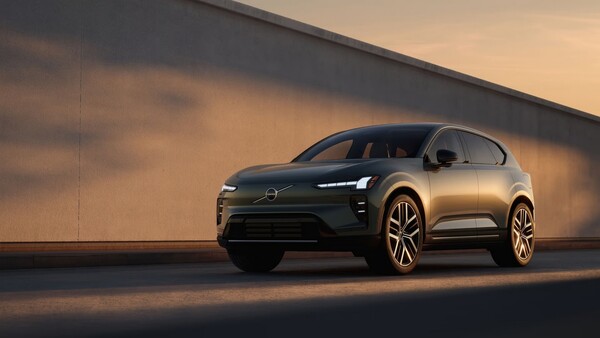
Volvo's new electric sport utility vehicle (SUV) EX60 is facing production disruptions. Output remains at about 10 percent of the original target, raising the likelihood that full-scale supply to the U.S. market will be delayed until the second half of 2027.
InsideEVs reported on Oct. 14 that Volvo is experiencing manufacturing problems related to batteries and electric motors as it ramps up EX60 production at its Torslanda plant in Sweden.
Volvo began mass production of the EX60 in late April and planned to make about 2,000 vehicles a week. Current output is about 200, about one-tenth of the target, it has been reported.
GlobalData said global EX60 sales fell from about 500 units in July to about 250 in August. Key causes of the production disruption include the assembly process of coupling the high-voltage battery pack to the body and difficulties in the electric motor manufacturing process.
The EX60, in particular, uses megacasting, which casts large body parts in a single piece, and cell-to-body technology, which integrates the battery into the body structure. The introduction of the new production methods is analysed to have weighed on early mass-production stabilisation.
Volvo is prioritising limited output for Europe, where demand for electric vehicles is relatively high. As a result, its plan to sell about 7,000 EX60s in the United States this year has effectively become difficult to achieve.
Jacquelyn Johnson (재클린 존슨), a Volvo spokesperson, said EX60 supply would be limited in the short term and expected that many of the already allocated vehicles would arrive at U.S. dealers in early next year. Large-scale supply, however, is expected to be possible only in the second half of 2027.
Volvo has now also faced delays in production of a key electric vehicle while its global sales in the third quarter fell 10.7 percent from a year earlier.
BMW and Mercedes-Benz are accelerating efforts to target the new electric SUV market, and the timing of a normalisation in EX60 supply is expected to determine Volvo's competitiveness in the U.S. market.
 Choi Jae-won
ittt_0801@d-today.co.kr
Choi Jae-won
ittt_0801@d-today.co.kr