
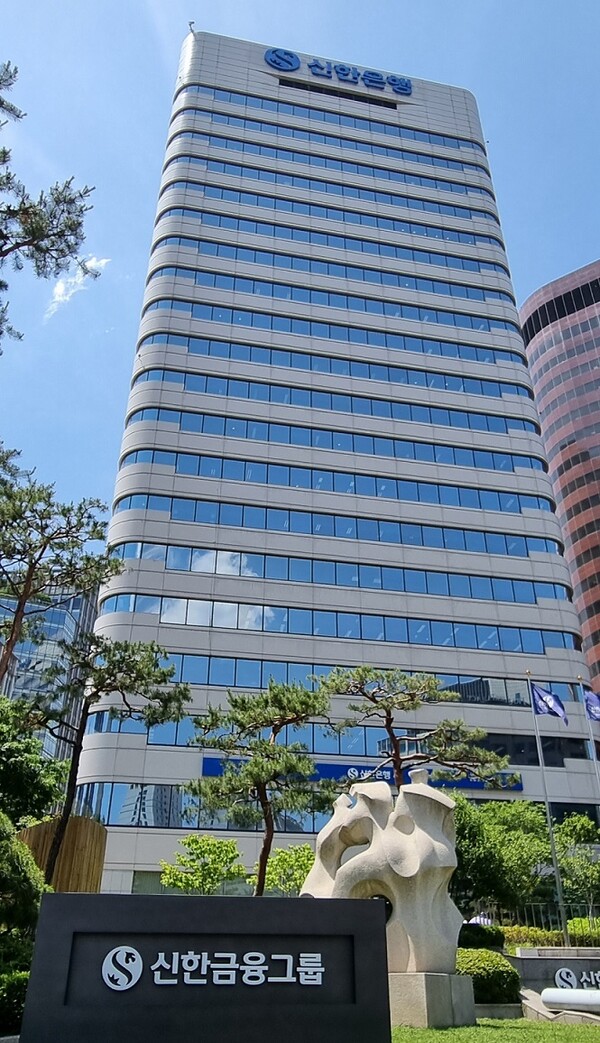
[DigitalToday reporter Ji-young Lee] Shinhan Financial Group has completed the final piece of its insurance business by acquiring Lotte Non-Life Insurance, but it has taken on the task of improving profitability. It plans to invest a total of 1.2 trillion won to secure the stake and strengthen capital. Lotte Insurance’s recovery in financial soundness and the possibility of additional capital injections are seen as variables that will determine the acquisition’s results.
Shinhan Financial Group signed a share purchase agreement (SPA) on the 13th with JKL Partners, the largest shareholder of Lotte Non-Life Insurance, to buy a 77.04% stake for 693.3 billion won. On a 100% stake basis, this implies a corporate value of about 900 billion won.
Shinhan Financial strengthened competitiveness in life insurance by acquiring Orange Life in 2019 and launching Shinhan Life in 2021. But Shinhan EZ Insurance, launched in 2022, has continued to post losses, leaving the group without a stable profit base in non-life insurance. This acquisition of Lotte Insurance is seen as a choice to address that weakness and broaden the profit base across its insurance business.
A comparison of insurance affiliate results between Shinhan Financial and KB Financial in the first half of this year also shows a pronounced gap in non-life insurance. Combined net profit at KB Financial’s insurance affiliates was 629.4 billion won, 357.0 billion won more than Shinhan Financial’s 272.4 billion won. That is also sizable compared with the 441.9 billion won gap in the groups’ overall net profit over the same period.
Specifically, Shinhan Life posted first-half net profit of 290.6 billion won, but Shinhan EZ Insurance recorded a net loss of 18.2 billion won. By contrast, KB Financial earned net profit of 478.8 billion won from KB Insurance alone. The gap in non-life insurance performance between the two groups reached 497.0 billion won.
Brokerages are also focusing on the need for Shinhan Financial to reinforce its non-life insurance business. Bae-seung Jeon (전배승), an analyst at LS Securities, said the group needed to bolster its non-life insurance lineup, which has been relatively weak since the 2019 Orange Life acquisition. He said it was not a bad deal when comprehensively considering conditions that make a structural slowdown in profitability in the card business, which had shown traditional strength, inevitable.
As Shinhan Financial moves to strengthen competitiveness in non-life insurance, Lotte Insurance’s customer base and insurance contracts are expected to underpin future business expansion. As of the end of the first half of this year, Lotte Insurance has about 3.34 million customers and insurance contract service margin (CSM) of 2.2 trillion won. Shinhan Financial plans to combine Lotte Insurance’s long-term protection-oriented sales base with affiliate channels such as the group’s bank and card units, and to cut overlapping costs through integration with Shinhan EZ Insurance.
◆ Corporate value 900 billion won... burden of additional capital strengthening
The acquisition price is also in focus. During efforts to sell the company in 2024, Lotte Insurance’s price tag was discussed at around 2 to 3 trillion won, but the target price fell as talks dragged on. The final agreement was struck at about 900 billion won on a 100% stake basis.
According to SK Securities, this is about 0.9 times price-to-book (PBR) versus Lotte Insurance’s net assets of 993.5 billion won in the first half of this year. LS Securities assessed the deal at a PBR of 0.95 times based on net asset value excluding 45.4 billion won in hybrid capital securities. Meritz Securities explained that Shinhan Financial considered the possibility of additional losses of 170.0 billion won due to volatility in financial gains and losses when valuing Lotte Insurance.
Still, buying at a lower price than the previously discussed asking price does not immediately make it a bargain purchase. That is because capital injections are planned to improve financial soundness.
According to SK Securities, Shinhan Financial plans to invest a total of 1.2 trillion won, including about 900 billion won to secure 100% of Lotte Insurance’s shares and 300 billion won for capital strengthening. For the capital strengthening, it plans to use funds that had originally been intended for a capital increase in Shinhan EZ Insurance, and to generate an improvement effect in core capital of about 460 billion won through a capital reduction without consideration at Lotte Insurance. Reflecting the reduction in capital from a shift to the principle-based model, the core capital improvement effect is estimated at about 450 billion won.
Brokerage forecasts on the need for additional capital injections are mixed.
Meritz Securities said the burden of additional capital injections is unlikely to be large when considering transitional measures applied through the end of 2035. SK Securities, however, said it would not be easy to meet a 50% core capital ratio through internal profits alone, considering core capital has improved significantly due to the recent rise in interest rates. It forecast at least one additional capital increase would be needed by 2035.
The impact on the group’s capital ratio is expected to be limited. Meritz Securities estimated Shinhan Financial’s common equity tier 1 (CET1) ratio would fall about 19 basis points from the initial stake acquisition, and an additional 6 to 7 basis points from buying the remaining stake. Shinhan Financial’s position is that it will pursue the acquisition by reallocating group capital without external funding, and will also maintain its existing shareholder return policy.
◆ Targeting 120 billion won profit increase within 3 years... earnings normalization key
The key is the pace of earnings improvement after integration. According to Meritz Securities and SK Securities, Shinhan Financial expects integration synergies between Lotte Insurance and Shinhan EZ Insurance to raise group profit and loss by at least 120 billion won within three years. It also expects the effect of lifting group return on equity (ROE) by a mid-0.2 percentage point level.
Lotte Insurance posted a first-half net loss of 19.0 billion won under the exception model and 56.6 billion won under the principle-based model. Meritz Securities estimated that if Lotte Insurance is assumed to generate annual net profit of more than 120 billion won, it would need to secure insurance profit and loss of about 140 billion won and manage investment losses to around 20 billion won. It said this is a simple estimate based on the exception model.
A possible decline in insurance contract service margin is also a variable. SK Securities analyzed that Lotte Insurance’s CSM could fall to around 1.5 trillion won after applying the principle-based model and making discount rates more realistic. That would mean the profit base that can be recognized as insurance profit and loss in the future may shrink.
LS Securities said it would take considerable time for Lotte Insurance’s profitability to improve. It said experience in improving profitability after the Shinhan Life integration is positive, but weak forecast-versus-actual insurance profit and loss, volatility in investment gains and losses, and a CSM gap with top non-life insurers are factors that make short-term earnings normalization difficult.
Ultimately, the success or failure of the acquisition depends on whether Shinhan Financial can connect the expansion of the non-life insurance business to tangible improvements in profitability. Brokerages cite improving Lotte Insurance’s insurance profit and loss and reducing volatility in investment gains and losses as key tasks.
Young-im Jang (장영임), an analyst at SK Securities, said Shinhan Financial strengthened its non-life insurance business through the Lotte Insurance acquisition, but it is likely to face significant difficulties until it proves investment efficiency through earnings normalization and improved capital soundness.
Jang said, "Overall, I judge it will not be easy to manage profit and loss and the capital ratio as much as expected," adding, "It has entered a phase where it must prove efficiency against the 1.2 trillion won of capital actually injected."
 Ji-young Lee
ljy@d-today.co.kr
Ji-young Lee
ljy@d-today.co.kr