
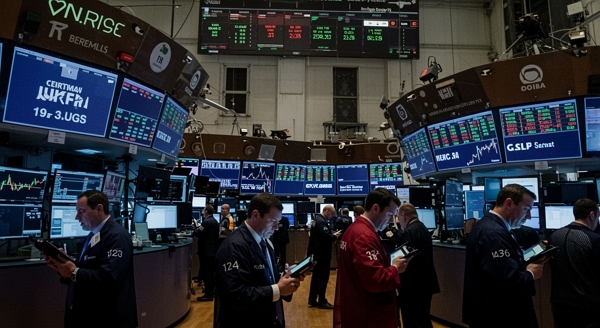
Concern has grown that corporate spending on AI may not rise quickly enough to support current AI infrastructure investment. Shares of companies tied to the AI infrastructure market plunged. On Oct. 14, Dell shares fell 11 percent. Hewlett Packard Enterprise (HPE), Oracle and Super Micro also declined.
Apple, which has been seen as lagging in the AI race, is enjoying a contrasting moment. It joined Nvidia as the second company ever to reach a $5 trillion market capitalisation.
CNBC reported that Barclays, a major bank, lowered its investment rating on Dell, HPE and NetApp to hold from buy in a report to clients. It cited a recent surge in share prices and a downward revision to the timeline for corporate AI adoption.
This year, data centre server and back-end equipment makers rose sharply on expectations that demand for AI chips and systems would last for a long time. Dell has climbed more than 300 percent since the start of the year. HPE has risen about 160 percent and NetApp has nearly doubled.
Investment sentiment toward the AI infrastructure sector has recently weakened. Concerns have emerged over OpenAI's revenue figures. Expectations that rising interest rates could weigh on debt-dependent infrastructure expansion have added to worries, pushing concerns about overinvestment higher.
Oracle shares, with a large debt load, fell 9 percent on Oct. 14 and are down 33 percent since the start of the year. Shares of neocloud company CoreWeave also tumbled 15 percent, giving up all of its gains in 2026.
Barclays said it has not confirmed a meaningful AI inflection point in corporate spending at Dell, HPE and NetApp. It said their revenue growth instead appears to reflect a global memory shortage. It explained that infrastructure companies passed higher memory prices on to customers. Barclays also said companies typically allocate only 5 percent of their overall IT budgets to AI, and that hardware accounts for about a quarter of total corporate AI spending.
There are also expectations that if memory prices normalise and then fall again, infrastructure-related revenue could come under pressure. China's memory chip maker ChangXin Memory Technologies (CXMT) disclosed progress this week on a new chip architecture, which also led to a plunge in related stocks. Micron fell 11 percent this week, and SK Hynix, which trades on U.S. markets, dropped 13 percent. Western Digital also fell more than 8 percent.
As shares of companies grouped with AI infrastructure stocks plunged, Apple reached the $5 trillion mark in market capitalisation at the close on Oct. 14. The company had been criticised as becoming outdated as it took a relatively cautious approach to AI.
It marks the birth of the second $5 trillion company after Nvidia.
Dow Jones Market Data said Apple's market capitalisation ended the day at $5.05 trillion. Apple has traded above $5 trillion intraday on six occasions before, but this was the first time it held the level at the close, the Wall Street Journal reported.
Apple shares are trading at a premium to the S&P 500. The Wall Street Journal, citing analysts, said revenue growth is below the index average but the stock benefits from an assessment that the business is safe and predictable.
Apple recently changed leaders from Tim Cook to John Ternus (존 터너스). Under Cook's former CEO era, Apple was relatively cautious on capital expenditure. While rival big tech companies poured huge sums into data centres, Apple focused on devices and high-margin services. The Wall Street Journal said this boosted investor returns and significantly reduced business risk.
Cost pressure also did not stop Apple's share rise. A surge in data centre demand led to shortages in memory and storage-chip supplies, driving up component costs for iPhones, Macs and iPads. Apple raised device prices, including for older iPhones. Even so, the stock rose 25 percent after the first price increase, the Wall Street Journal reported.
The Wall Street Journal, citing Bank of America (BofA) analyst Wamsi Mohan (왐시 모한), also offered a forecast: "Consumers will accept higher prices. Even if margins shrink, total profit could stay the same or increase. The foldable iPhone Duo will gain popularity and the new Siri AI will spur replacement demand."
 Chi-gyu Hwang
delight@d-today.co.kr
Chi-gyu Hwang
delight@d-today.co.kr