
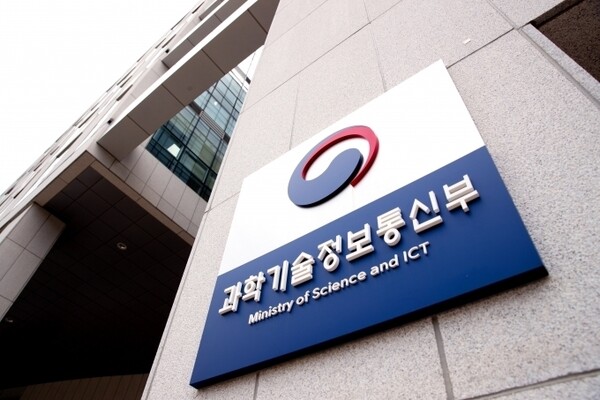
South Korea's Ministry of Science and ICT has formed a new dedicated organisation to oversee policies to foster future growth engines. The move is aimed at linking the seven SEED projects to an integrated cross-government 추진 system. As the Office of Science and Technology Innovation takes charge of coordinating research and development projects among ministries and managing implementation, the rollout of the seven SEED projects is expected to accelerate.
Government officials said on Oct. 14 that the ministry created the Future Pioneering Planning Division under the Science and Technology Policy Bureau of the Office of Science and Technology Innovation on Oct. 8 and began official work.
The division is a temporary autonomous unit that will operate for six months through April 7 next year. The ministry is running three departments as autonomous units within the ministry: the Science and Technology and AI Convergence Innovation Officer, the Science and Technology and AI Future Strategy Officer, and the Science and Technology and AI Innovation Division. It abolished the Future Strategy Officer and set up the Future Pioneering Planning Division.
The new division will take charge of cross-government coordination for the seven SEED projects. It will comprehensively manage programmes that lead and cooperating ministries had 추진 separately by field and mediate issues that require consultations between ministries.
The government selected small modular reactors (SMRs), nuclear fusion, renewable energy, quantum, space and aviation, advanced bio, and advanced supply chains as the seven SEED future growth engines in August. Since then, 15 ministries, agencies and committees have taken part to flesh out the implementation system, fiscal investment and support measures for start-ups and commercialisation.
The government will invest about 4 trillion won in the seven SEED projects in 2027 alone. It will expand investment-type R&D in which the government and companies invest jointly to share risks and will also use the growth engine account of the Future Response Fund. Existing R&D programmes will also be overhauled to fit the goals of the SEED projects.
A ministry official said the seven SEED projects are being prepared to sow seeds of innovation and growth. The official said a separate division was created because the projects are cross-government and require an organisation to oversee and support them.
The official also said the Office of Science and Technology Innovation would take on coordination work among related ministries as it carries out the role of planning, coordinating and evaluating cross-government R&D.
With lead and cooperating ministries divided for each of the seven SEED areas, responding to coordination demand that arises in adjusting programmes is the division's main task. It will manage common issues or linked tasks among programmes that arise as each ministry draws up implementation plans and operates expert advisory groups.
The division's work is not limited to inter-ministerial consultations. Under a ministry directive, it is also in charge of tasks including drafting policies to foster advanced technologies and future industries, providing fiscal and financial support, supporting the 추진 of national R&D projects, checking policy performance, analysing domestic and overseas technology trends, and identifying regulatory improvements.
The government will operate a cross-government and public-private joint implementation system for the seven SEED projects centred on the ministerial meeting on science and technology-related affairs. Lead ministries by field plan to form consultative bodies involving the government, research community and industry and draw up specific goals and implementation strategies within this year. The division will support coordination among programmes and responses to common issues in this process.
The division will have a total staff of 7, including its head. The head will be appointed from among Grade 4 officials, and the unit can also include secondees from related administrative agencies, public institutions and private companies, as well as ministry officials. The ministry is also considering a plan to develop it into a 'Future Pioneering Task Force'.
The official said there are lead and cooperating ministries for each SEED area and coordination may be needed in the process of drawing up implementation plans. The official said the ministry plans to coordinate and support the assigned programmes from an overall perspective.
 Jin-ho Lee
jhlee26@d-today.co.kr
Jin-ho Lee
jhlee26@d-today.co.kr