
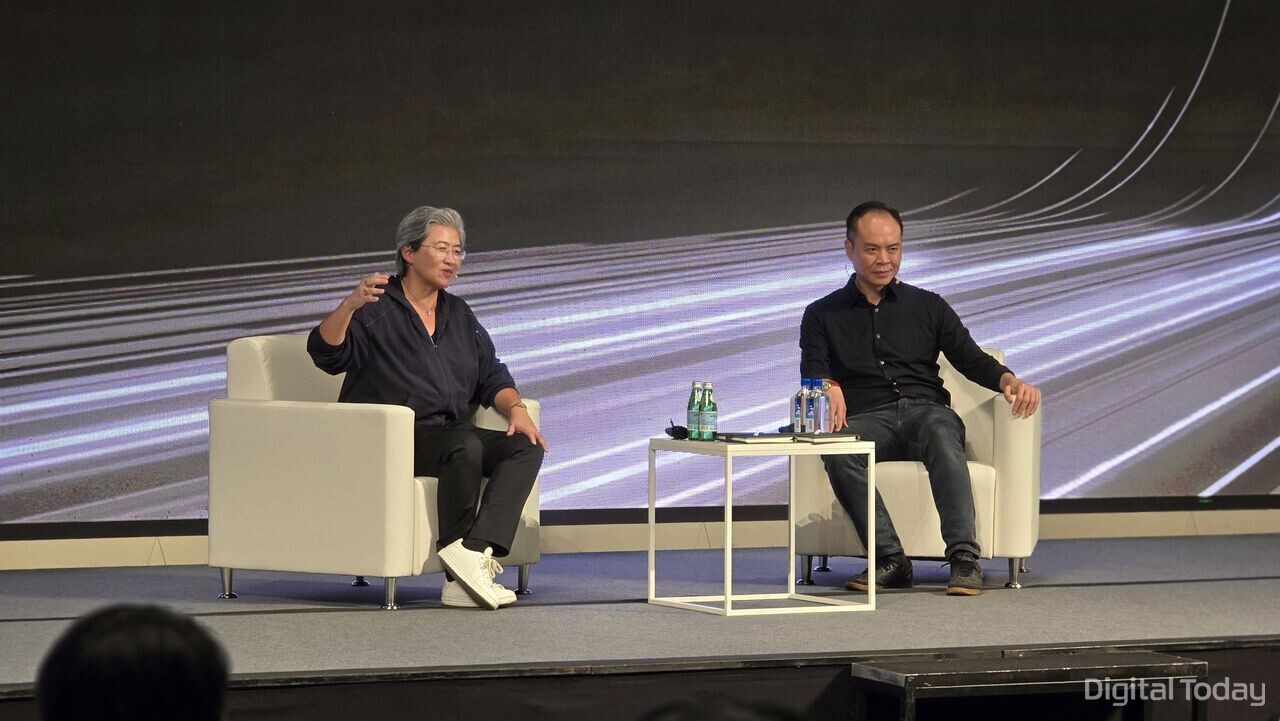
AMD Chair and CEO Lisa Su (리사 수) said she wants to develop gaming into a major AMD business even as the AI market expands. Because gaming continues to demand high computing performance, AMD plans to apply AI technologies to game graphics and development processes to improve performance and development efficiency.
Su attended 'AMD Gamer Day 2026' held at Dragon City in Seoul's Yongsan district on Tuesday. "Gaming is a very important core area of computing and continues to demand high performance," she said. "From AMD's perspective, gaming is a very important business."
Su's visit to South Korea was her first in about 7 months since March. She discussed ways to cooperate with the domestic AI ecosystem on Tuesday morning, and later met gamers to explain AMD's gaming business and technology strategy.
At the event, Su highlighted South Korean gamers' demand for high performance. "Looking back over the past 10 years, users of Ryzen and Radeon in Korea have been among the most passionate users in the world who pursue high performance," she said. "Korean gamers demand top-tier performance even globally."
She added that one reason she likes gaming is that it keeps pushing the limits of technology. "Gamers are users with the highest expectations who demand the highest performance," she said.
Ryzen, X3D development prioritised gaming, from PCs to consoles and handhelds
AMD said it has considered gaming as a key use case since the early stages of processor development.
Su said that when AMD first developed Ryzen and Zen, gaming was the first use case it considered important. She said that in developing every generation from Zen 1 to Zen 6, AMD thought about how to make the gaming experience better.
She also stressed that the X3D processor, specialised for gaming performance, was developed for gaming.
The gaming business is not limited to PCs. "Users game on PCs, on consoles and on handheld devices," Su said. "AMD will continue to support all form factors, including PCs, consoles and handheld devices."
Jack Huynh (잭 후인), senior vice president and general manager of AMD's Computing and Graphics Group, said the number of gaming devices worldwide that use AMD technology totals about 1 billion.
"Not only PCs but also handheld gaming devices such as PlayStation, Xbox, Steam Deck, ROG Ally and Legion Go are important," he said. "We want to provide a range of options from premium gaming devices to entry-level and mid-priced models."
Gaming and AI integration expands from graphics to development processes
AMD said it plans to broaden the use of AI in its gaming business. It aims to apply machine learning technologies to game graphics and development processes to improve performance and production efficiency.
Su said that while there is tremendous interest and expectation around AI, gaming is also a very important core area of computing. "Now gaming and AI are being combined with each other," she said.
Huynh said AMD's machine learning technology is being used to improve game performance and image quality. FSR technology applies machine learning-based upscaling, frame generation and ray regeneration. AMD plans to expand the machine learning technology applied to discrete graphics to APUs and handheld gaming devices within this year.
AMD also plans to use AI in the game production process.
Huynh noted that big game development takes a long time. "The direction we want is to use AI to shorten development times that used to take 10 years to around 3 to 4 years," he said. He said AI-based development tools could expand opportunities for startups and small development teams to participate in game production.
He drew a line at AI replacing creators' roles.
"We need to preserve what the creator originally intended," Huynh said. "AI should not replace an artist's creativity, but should become a tool to expand creativity."
Long-term platform support to ease price burdens
On the recent rise in hardware prices such as gaming PCs, AMD suggested it would support existing platforms over the long term to reduce upgrade burdens.
Huynh said AMD views pricing as very important, and is supporting easier upgrades by using existing memory and platforms. AMD plans to continue supporting the AM4 platform, and also support AM5 through 2029.
AMD is also continuing cooperation with South Korean game companies. Huynh said AMD has worked with Pearl Abyss for about 2 years and is working closely with game developers.
Su said that as the importance of AI continues to grow, AMD's new products will show Ryzen and AI more tightly integrated. "I think there is a significant point of contact between the areas where gaming and AI are used," she said.
"My schedule in Seoul is quite short, but I really wanted to have a chance to meet Korea's gaming fans in person," she said. "Gaming is not simply about hardware or the game itself, but about bringing people and communities together."
 Lee Ho-jung
lhj@d-today.co.kr
Lee Ho-jung
lhj@d-today.co.kr