
A paper in which former U.S. Securities and Exchange Commission (SEC) chair Gary Gensler warned in 2020 that the spread of deep learning in finance could become a new risk to the financial system is drawing renewed attention. As an era approaches in which artificial intelligence (AI) agents directly take part in financial decision-making, concerns raised at the time are intersecting with current debate.
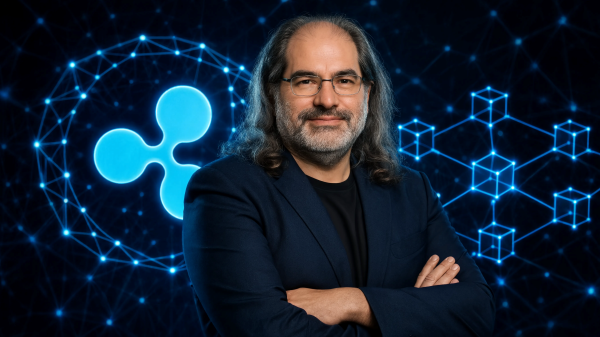
According to blockchain media outlet U.Today on Sept. 29 local time, David Schwartz, who served as Ripple's chief technology officer, expressed sympathy with the core issues raised in the debate over Gensler's past paper but drew a line at some claims.
The debate began when X user Andrew Curran reshared Gensler's 2020 paper. Curran highlighted that Gensler had earlier pointed out that if deep learning spread across finance, vulnerabilities in the financial system and risks across the broader economy could grow. Curran assessed that Gensler may have foreseen the related risks too early at the time.
In November 2020, before becoming SEC chair, Gensler published a paper titled "Deep Learning and Financial Stability" with Lily Bailey of the Massachusetts Institute of Technology (MIT) Sloan School of Management.
The paper said that if deep learning is used widely in financial institutions' data analysis and decision-making, existing financial regulatory frameworks may struggle to adequately address new forms of systemic risk. A key point was that if financial institutions use similar models and data, not decisions by individual institutions but simultaneous moves by the market as a whole could increase risk.
The issue has resurfaced recently alongside the spread of AI agents. Citing analysis by Apollo chief economist Torsten Slok, Curran raised the possibility that if AI agents make similar decisions at the same time while optimising users' funds, financial instability such as a bank run could occur.
The situation could become more complex if AI agents move beyond providing information to making their own judgments, forming plans and carrying out multiple stages of financial transactions. If thousands or millions of AI systems move simultaneously based on similar data, interactions among systems could increase market volatility regardless of the accuracy of each individual AI.
Schwartz did not deny the broader point. He said much of Gensler's paper "makes sense" and agreed that automated decision-making could operate in the same direction at the same time in markets.
He did not agree, however, with the claim that as AI becomes more intelligent it will instead behave irrationally. Schwartz said, in effect, that there is a problem with the logic that AI would become so smart that it would do something stupid.
The analysis is that risks the financial sector should focus on now are hard to explain solely by the level of AI intelligence. A new variable is not only how accurately each AI makes decisions, but also what happens when similar AI systems make the same decisions at the same time in markets.
That is why Gensler's 2020 paper has been revived. The point is that as AI agents become more autonomous, financial institutions and regulators should examine not only the pace of technology adoption and the performance of individual models but also the collective impact of large-scale automation on the market as a whole.
 Jinju Hong
hongjj@d-today.co.kr
Jinju Hong
hongjj@d-today.co.kr