
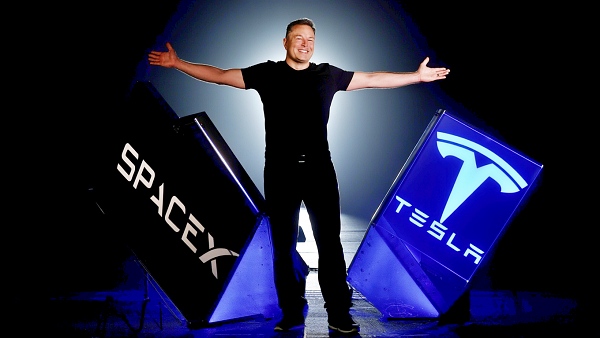
[Digital Today intern reporter Seung-a Yoo] Tesla has received approval from the U.S. Securities and Exchange Commission for a program that allows retail shareholders to automatically exercise voting rights in line with board recommendations. With the possibility of a merger with SpaceX being discussed, attention is focusing on whether the program could become a factor in future shareholder votes.
Electrek, an electric-vehicle outlet, reported on Sept. 29 that the SEC allowed Tesla’s application for an “issuer voluntary retail shareholder voting program.” If a retail shareholder signs up, votes at each shareholder meeting will be cast automatically in line with Tesla’s board recommendations until the shareholder opts out.
Participants can choose either to apply it to all agenda items or to exclude contested director elections and matters requiring shareholder approval such as mergers and acquisitions and business sales. There is no option to vote against the board or to set separate voting instructions in advance. Participants can change how they vote on individual items or cancel the program for free.
Tesla cited low voting participation by retail shareholders as the basis for introducing the program. Data from Broadridge showed retail shareholder participation in the 2025 proxy season was 28 percent, lower than institutional investors’ 76.6 percent. Tesla said it recently spent more than $2 million in proxy solicitation costs alone to secure retail shareholder votes at its past two annual meetings.
At Tesla, retail shareholder votes have decided the outcome of key agenda items. Last year, proxy advisory firms ISS and Glass Lewis recommended voting against a new compensation package for Elon Musk (일론 머스크), but the proposal passed with support from retail shareholders.
At the same shareholder meeting, about 1.06 billion shares voted in favour of a shareholder proposal related to Tesla’s investment in xAI, while 916 million shares voted against. More than 473 million shares abstained, and Tesla counted abstentions as votes against and treated the proposal as rejected. Tesla later invested $2 billion in xAI in January, and a few weeks later SpaceX acquired xAI, converting Tesla’s stake into SpaceX shares.
The approval came as Tesla has yet to set the date for its 2026 annual shareholders meeting. Tesla said in an amended 10-K on April 30 that the board had not yet set the meeting date and that proxy filings would also be delayed. Last year’s annual meeting was held on Nov. 6.
Elon Musk has hinted in recent months at the possibility of combining Tesla and SpaceX. SpaceX was valued at about $2 trillion after its June listing, while Tesla’s market value was recently about $1.47 trillion. Musk owns about 20 percent of Tesla and controls more than 80 percent of voting power at SpaceX.
Musk’s 2025 CEO performance compensation package also includes a clause that, in the event of a change of control, allows some compensation conditions to be met based only on market capitalisation, excluding business targets. Typically, compensation tiers require meeting business targets such as vehicle deliveries, the Optimus robot and robotaxis, along with market-capitalisation goals starting from $2 trillion. If control changes, business targets are excluded and conditions can be met by measuring market capitalisation based only on the deal price and other factors.
An analysis says if SpaceX acquires Tesla at a valuation of around $2 trillion, Musk could secure the first compensation tier without meeting business targets such as robotaxis. Based on about 3.95 billion Tesla shares outstanding, that would be about $506 per share, about 36 percent higher than last week’s share price.
A deal with SpaceX would require a shareholder vote. For this reason, the amount of retail shareholder votes set to be cast automatically in line with board recommendations could become a key variable. At present, however, there is no basis to conclude that this voting program is directly linked to a SpaceX-related transaction.
 Seung-a Yoo
ysah@d-today.co.kr
Seung-a Yoo
ysah@d-today.co.kr