
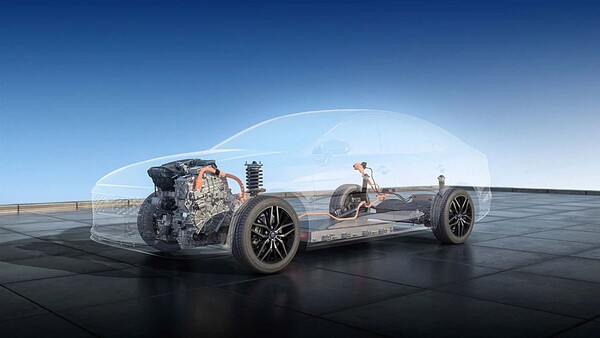
BYD will unveil its first vehicle fitted with a solid-state battery in 2027. It has not yet disclosed the specific model or a mass-production timetable.
On Sept. 27 (local time), IT outlet Engadget reported that BYD said it is in a "leading position" in solid-state battery technology and commercialisation. Stella Li (스텔라 리), BYD executive vice president, said in a recent interview with Spanish edition of Carwow that BYD leads the solid-state battery field and is ahead in both commercialisation and technology. She added that BYD will unveil 1 model that first applies the technology in 2027 to back up that claim.
It has not been confirmed whether the 2027 vehicle will be a mass-produced model for general consumers. Li did not disclose the specific model, launch date, battery capacity or performance. So far, the disclosed information is closer to a plan to apply solid-state battery technology to an actual vehicle and present it.
The remarks also align with a roadmap disclosed by Sun Huajun (쑨화쥔), chief technology officer (CTO) at BYD battery subsidiary FinDreams, at a battery conference in February 2025. Sun presented a plan to begin demonstrations and vehicle fitment of solid-state batteries in 2027 and move into large-scale production and deployment around 2030. BYD is developing sulfide-based solid-state batteries in particular.
BYD does not expect solid-state batteries to immediately replace existing lithium-ion batteries. Lian Yubo (롄위보), BYD chief scientist, said at the time that solid-state batteries will mainly be used in premium models and be applied alongside lithium iron phosphate (LFP) batteries depending on vehicle price ranges. That means LFP batteries will not disappear in the short term but will be used in parallel with solid-state batteries.
Solid-state batteries replace the liquid electrolyte in existing lithium-ion batteries with a solid electrolyte. Solid electrolytes may enable higher energy density, which could reduce battery size and weight while increasing driving range per charge. Lower fire risk and possible operation in extreme temperatures are also cited as advantages. The sulfide-based solid-state batteries BYD is developing are also presented as offering potential improvements in fast charging, safety and lifespan.
Cost is the biggest obstacle for the current technology. As a result, solid-state batteries are discussed as likely to be applied initially to premium models that are relatively expensive. Models such as the Denza Z have been mentioned as candidates, but BYD has not confirmed specific models for application.
Competition among automakers over solid-state batteries is also continuing. Toyota aims to launch a solid-state battery vehicle in 2027 to 2028, and Mercedes has been testing an EQS equipped with a solid-state battery. Stellantis began road tests in 2026 of a development vehicle for the Dodge Charger Daytona fitted with a solid-state battery. Honda signed a joint research agreement on solid-state batteries with QuantumScape this year.
With BYD's announcement, the solid-state battery race has moved a step further beyond the laboratory and into actual vehicle application. But with 2027 presented as the technology application and demonstration stage and around 2030 as the large-scale production stage, key factors for actual commercialisation are expected to be future vehicle performance, production costs and the scope of deployment.
 Yoo Seung-a
ysah@d-today.co.kr
Yoo Seung-a
ysah@d-today.co.kr