
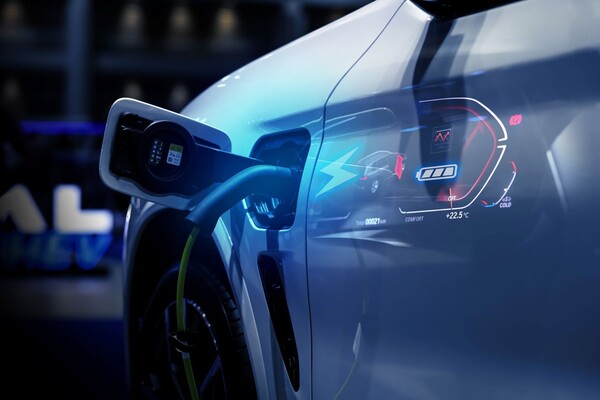
A Harvard University study finds electric vehicles will account for 32 percent of U.S. new car sales in 2030. It estimated the share would have been close to 48 percent without changes in federal policy.
According to EV outlet CleanTechnica on Sept. 25, the projection is included in a report by Elaine Buckberg, James Stock and Kassandra Cole of Harvard University's Salata Institute titled "Simulating the Impact of Trump Administration Policy Changes on Electric Vehicle Adoption". The researchers analysed the EV adoption path by reflecting regulatory and legislative measures the U.S. government implemented from January 2025.
The analysis included ending tax credits for EV purchases and tax benefits for installing charging equipment, easing emissions regulations, and revoking California's authority to apply stricter emissions standards. Among these, the move with the biggest market impact was the elimination of the EV purchase tax credit. The researchers said removing the benefit that reduced the price of a new vehicle by $7,500 lowered the projected EV market share in 2030 by 6.2 percentage points.
The researchers judged that policy changes may slow the spread of EVs but cannot stop the overall trend. Buckberg, a co-author of the report, said market-based adoption will continue over the long term, adding that the direction of adoption remains even under policies that ease pressure to sell EVs.
The researchers cited improvements in battery technology as a key driver. They said that as battery technology matures, automakers can provide longer driving range without sharply raising prices. They also noted that EV use has changed from the early days. When first-generation models such as the Nissan Leaf had a range of less than 100 miles, EVs were largely used as a second car for short urban trips, but they are now being used similarly to internal combustion engine cars thanks to longer range, the spread of public fast charging and expanded access to the Tesla Supercharger network.
The researchers pointed to consumer anxiety about charging infrastructure as the biggest obstacle. Buckberg said, "Concerns about charging are the biggest factor holding back EV adoption," adding that as improvements in battery cost and energy density narrow the price gap and make it possible to get more than 300 miles of range and 10 to 15 minutes of highway charging, EVs become more attractive as an alternative.
Transparency of charging information was also presented as a variable. The researchers said making it easier to check charger status and pricing information in charging apps could reduce range anxiety and potentially lift EV sales by up to 6 percent. Buckberg said, "The effect of the EV tax credit could diminish as the price gap narrows," and added, "Charging is the most cost-effective means, and real-time data is the cheapest among them." She added that it is an area that can be implemented immediately at the state government level.
North American EV production and investment plans are also showing divergent trends. Stellantis showed signs of retreating from its EV strategy, and Ford was cited for having a limited passenger EV lineup. General Motors has the most battery EV models among U.S. automakers, but it is switching a battery plant from producing cells for EVs to producing cells for energy storage systems.
Volkswagen is also moving to adjust its North American strategy. Battery subsidiary PowerCo said it would delay the start-up of its new plant in St. Thomas, Ontario, Canada, by 2 years. Joel Kalsberg (조엘 칼스버그), PowerCo Canada head of procurement, said the plant remains a core part of the North American strategy, but the company is adjusting the pace to protect long-term investment and support local jobs.
Some companies, however, are continuing to introduce new EVs. Ford signalled it will launch a new midsize electric pickup truck. Hyundai is focusing on range-extended EVs that use both a battery and a gasoline engine, and also plans to introduce a Santa Fe EV.
Ultimately, the outlook is read as an assessment of whether the U.S. EV market can continue to grow despite policy rollbacks. The researchers judged that while reduced tax benefits and eased regulations do slow adoption, improved price competitiveness and charging convenience could still expand EVs to about one-third of the new-car market in 2030.
 Jinju Hong
hongjj@d-today.co.kr
Jinju Hong
hongjj@d-today.co.kr