
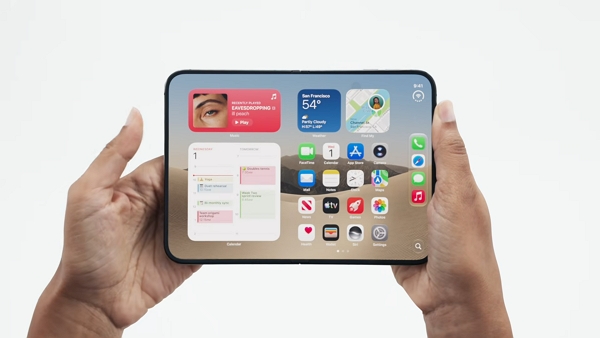
[DigitalToday reporter Yoonseo Lee (이윤서)] Foldable phones are emerging as alternatives to small tablets used on the move, but an assessment said they still have limits when it comes to fully replacing devices for work.
On Sept. 27, U.S. time, IT outlet Engadget noted that as book-style foldable phones have grown in screen size and portability, the line between them and small tablets is rapidly blurring.
The key is the combination of screen and portability. The latest iPad mini has an 8.3-inch display. When unfolded, the Pixel 11 Pro Fold and Galaxy Z Fold8 Ultra have 8-inch-class screens that are 0.3 inches smaller. The iPhone Duo is also slightly smaller at 7.6 inches, but the difference is not large. Small tablets must be carried separately, while foldables stand out because devices around 8 inches fold into a typical smartphone size.
Ease of use is also a strength. Foldables can be used like a smartphone and then unfolded to offer a more tablet-like experience, with straightforward data connectivity while on the move. Tablets often require a separate cellular plan or smartphone tethering, but foldables can use a larger screen under an existing smartphone plan. The assessment said they can be folded and put into a pocket after use, making them sufficient to replace tablets for light tasks.
Still, there is a clear gap between everyday use and work use. Foldables are suited to multitasking with 2, or at most 3, apps on screen at once and portable entertainment, but they struggle to match the wide workspace and long-use convenience of tablets. The difference grows in tasks where a large screen matters, such as video editing and graphic work.
There are also limits to peripheral connectivity. Foldables, like tablets, can connect accessories to handle simple work during business trips, but it is difficult to view them as primary work devices. That is because concentrating work on a smartphone increases the battery burden.
High prices also limit demand to replace tablets. The Pixel 11 Pro Fold and Galaxy Z Fold8 are both high-priced products, and combining a smartphone and tablet into one can cost more than buying the two devices separately.
Structural limitations also remain. Hinges and folding displays are central to foldables, but they make the structure more complex and raise manufacturing costs and wear. As they deliver larger screens, thickness and weight tend to increase, and creases on the inner screen can stand out depending on lighting. Products are getting thinner and lighter, but improvements are still needed.
Software optimization is also a task. Android’s large-screen support and split-screen features have improved, but some apps do not make full use of the unfolded display. In some cases, portrait-oriented layouts are simply stretched across a wide panel, making it difficult for screen size alone to guarantee tablet-level usability.
Ultimately, foldables can provide portability and a large screen at the same time, taking over part of the role of small tablets. But considering price, battery, durability and app optimization, they are not a solution that replaces both devices for all users. If the main purpose is serious work on the move, a dedicated tablet may still be more suitable.
The assessment shows that foldables’ competitors no longer stop at ordinary smartphones. It also highlighted a limitation: basic conditions such as displays, battery, app optimization and price must be addressed for tablet replacement to become widespread.
 Yoonseo Lee
yslee@d-today.co.kr
Yoonseo Lee
yslee@d-today.co.kr