
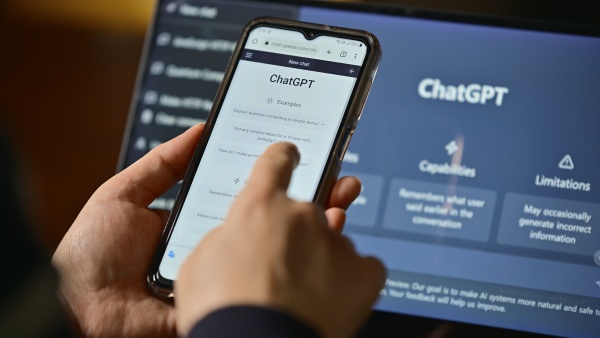
Even if the artificial intelligence (AI) bubble bursts, ChatGPT may not vanish immediately and could instead change through smaller free features, more advertising and a stronger push to convert users to subscriptions, an outlook said.
On Sept. 26, IT outlet TechRadar said that if the AI industry’s funding structure is shaken, OpenAI’s service operations and monetisation strategy could change significantly.
At the core is the gap between profitability and the pace of investment. AI companies have pulled in large sums over the past few years, but doubts are growing in the market that comparable profits may not arrive fast enough. The so-called AI bubble debate stems from the view that investment, spending and some company valuations have outpaced what current technology is actually earning.
In that case, the first thing that could change is ChatGPT’s revenue model. OpenAI said ChatGPT’s advertising business reached an annualised $1 billion in revenue in fewer than 200 days and that it sees advertising as part of its core business model. The worse funding conditions get, the stronger OpenAI’s incentive may be to extract more revenue from its vast user base.
As a result, the most noticeable change for users could start with more ad exposure. With chatbots already deeply embedded in purchase decisions such as product research, travel planning and software selection, there is a view that referral fees, sponsored experiences and shopping tie-ins could expand further.
Pressure to charge more could also grow. OpenAI could choose to raise subscription fees for existing paying users and corporate customers, or convert free users to paid subscriptions. High-performance models, agents, advanced research tools, various integration features and the latest functions could be limited to higher-priced plans.
Product development priorities could also shift. So far, backed by ample funding, it has been able to push experimental features, high-cost demonstrations and new consumer functions quickly, but priorities could change if funding pressure grows.
The possibility of a market reshuffle is also being discussed. Unlike big players, smaller AI companies, apps and startups could face a bigger shock if investment cools. For ordinary users, that would be closer to fewer choices than AI disappearing.
Still, ChatGPT itself was assessed as relatively likely to endure. Billions of dollars have already been poured into chips, data centres and trained models, and AI is embedded in numerous products and businesses. OpenAI also says ChatGPT has more than 1,000,000,000 weekly active users. Its revenue sources are also diversified across subscriptions, advertising, corporate customers and APIs.
Against this backdrop, even if an AI bubble collapse becomes reality, the changes users feel are likely to be gradual rather than sudden. Free limits could be hit more often, new features could be locked behind subscriptions, ads could increase, and smaller AI apps people used could disappear or be acquired. In the end, ChatGPT could remain, but it may become more expensive and shift toward a smaller scope of free access, the outlook said.
The core of this outlook is not whether AI services survive but a reshaping of revenue structures. It shows that even if services with user scale and revenue sources like ChatGPT remain, the free-use experience and how features are allocated could change significantly.
 Yoonseo Lee
yslee@d-today.co.kr
Yoonseo Lee
yslee@d-today.co.kr