
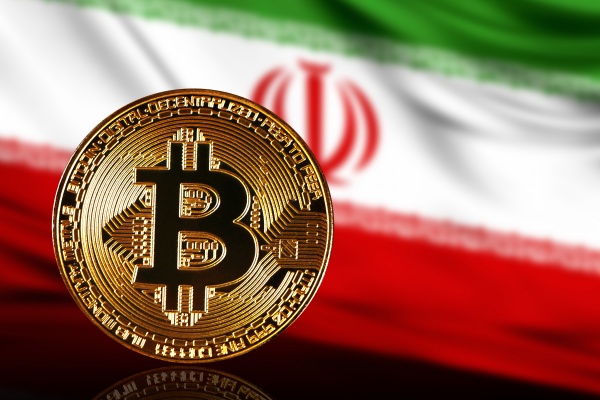
[DigitalToday reporter Jinju Hong] The U.S. Treasury has put Iranian cryptocurrency exchange Bitbank on its sanctions list.
Bitcoin Magazine reported on Sept. 17 local time that the United States announced measures targeting related exchanges and funding networks to block Iran from moving funds to evade sanctions using bitcoin.
The designation is part of the Trump administration’s “Operation Economic Outcast” campaign of economic pressure on Iran. The Treasury defined Bitbank as a digital asset infrastructure that helps the Islamic Republic of Iran and forces that support it.
Those designated also included Babak Zanjani (바박 잔자니), identified as an Iranian financier, and his software developer, Pishtaz Simorgh Electronic Trade Company. Three people linked to Zanjani were also listed: Hossein Ali Zaker Hossein (후세인 알리 자케르 호세인), Mohammad Mahdi Zaker Hossein (모하마드 마흐디 자케르 호세인) and Seyyed Adel Heidari (세예드 아델 헤이다리). The Treasury said the move targets a money-laundering structure built by Zanjani.
The key point is that Bitbank was used as an actual channel for moving funds. The Treasury explained that authorities at Hormuz Saif Marine Services have been using Bitbank since June to move bitcoin to the Iranian government. The sanctions are seen as intended to block both that flow of transactions and the infrastructure that supported it.
Treasury Secretary Scott Bessent said the designation of Iran’s digital asset infrastructure clearly shows that attempts to raise funds using cryptocurrency are not beyond the reach of the Office of Foreign Assets Control. He added that the Treasury will impose sanctions if support is provided to the Iranian government.
The United States believes Iran has used cryptocurrency more actively this year. Iran has faced long-term economic sanctions, and the Treasury judges that it has recently increased moves to bypass them using cryptocurrencies including bitcoin.
The trend is also linked to earlier measures. The United States said in July it froze cryptocurrency linked to the Iranian government. Most of the frozen assets at the time were Tether stablecoins. Stablecoins can be frozen by issuers, but bitcoin has no central issuer, making the same type of control difficult. That is also why the United States is targeting both bitcoin transfer routes and the transaction infrastructure that intermediates them.
The Office of Foreign Assets Control said in July that Iran had evaded sanctions by receiving payments in bitcoin from ships passing through the Strait of Hormuz. It said at the time that Hormuz Saif was developed by Iran’s Ministry of Economy and that it accepted payments in bitcoin and other digital assets to bypass sanctions.
Iran also began a bitcoin-based insurance service early this year for its domestic shipping companies. As a result, the latest U.S. move is continuing as a series of actions that go beyond sanctioning individual exchanges to target Iran’s broader use of digital assets. The Treasury said it will continue to sanction not only Iran’s digital asset ecosystem but also overseas groups and actors that help it.
 Jinju Hong
hongjj@d-today.co.kr
Jinju Hong
hongjj@d-today.co.kr