
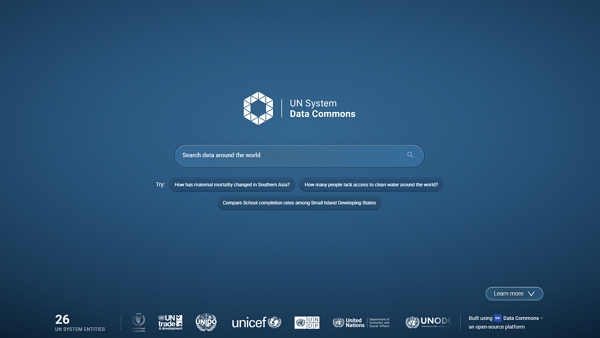
The United Nations has unveiled an integrated data platform with Google that allows AI to easily search for and use global statistics. A key feature is that it links materials scattered across multiple UN agencies so AI can check the sources of figures.
On Sept. 17, IT media outlet TechCrunch reported that the UN launched the UN System Data Commons to replace its existing statistics portal, UNData. Built on Google's open-source technology, the platform allows users to search statistics in natural language. It also supports the Model Context Protocol (MCP), a standard for AI systems to connect to external data.
The platform was built against the backdrop of concerns about the accuracy of AI in searching statistics. UNICEF researchers evaluated more than 133,000 responses related to global development indicators from 6 large language models, and found the average accuracy was 21.2 percent. About 60 percent of responses failed to provide usable figures. When the same questions were asked again 2 days later, only about half of the responses that provided figures both times matched in value.
Demand for access to statistics through AI is rising. From Jan. 1 to Sept. 14 this year, visits to UNICEF's data site via links in ChatGPT answers rose 67 percent from the same period a year earlier.
A total of 26 UN agencies have pledged to participate in the platform, and about 20 will provide data at launch. The UN plans to link 80 percent of all statistical datasets by 2027. Google.org provided $2 million, or about 2.77 billion won, as well as technical support to build the infrastructure.
Google also demonstrated a function in which AI pulls in multiple indicators to create charts and draft reports. Still, even if it uses authoritative statistics, there is no guarantee that AI's interpretation will be accurate. Google stressed that a person should review the original sources before citing figures or publishing analysis results.
 Jae-won Choi
ittt_0801@d-today.co.kr
Jae-won Choi
ittt_0801@d-today.co.kr